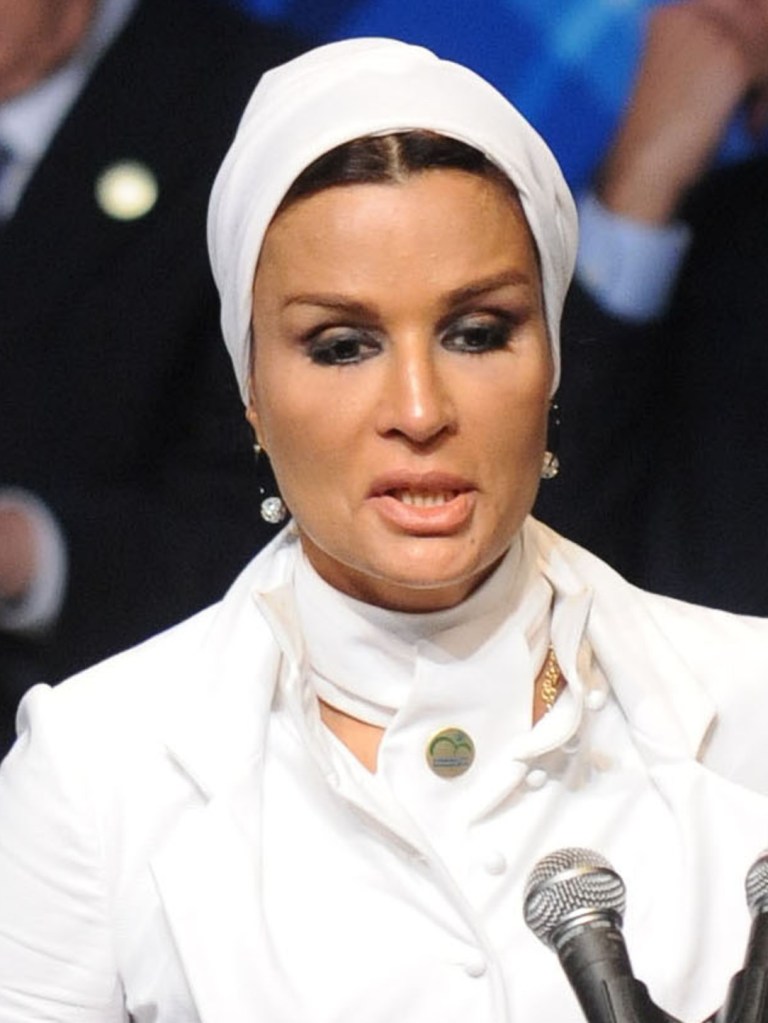
Photo by Wilson Dias/ABr – Agência Brasil, CC BY 3.0 br, https://commons.wikimedia.org/w/index.php?curid=177455806
Sheikha Moza bint Nasser al-Missned is a figure of immense influence, both in her official capacity as a champion of education and reform, and, according to some, in the covert machinations of Qatari politics. This post delves into what is publicly known about her, juxtaposed with the striking allegations made by businessman Alan Bender.
Part 1: Context – What We Know About Sheikha Moza
Sheikha Moza is the second of three wives of the former Emir of Qatar, Sheikh Hamad bin Khalifa Al Thani, and the mother of the current Emir, Sheikh Tamim bin Hamad Al Thani. Born in 1959, her public profile is largely defined by her extensive work in education, social development, and cultural preservation.
Key Public Roles and Achievements:
- Qatar Foundation: She is perhaps best known as the Chairperson of the Qatar Foundation for Education, Science and Community Development. Under her leadership, the Qatar Foundation has transformed Qatar into a regional hub for education and research, attracting branches of leading international universities (like Weill Cornell Medicine, Carnegie Mellon, Georgetown, and Northwestern) to Doha’s “Education City.”
- UNESCO Special Envoy: Her global advocacy for education led to her appointment as a UNESCO Special Envoy for Basic and Higher Education.
- UN Millennium Development Goals Advocate: She has been an active advocate for the UN Millennium Development Goals, particularly those related to education and health.
- Fashion Icon: She is also recognized internationally as a style icon, frequently appearing on “best-dressed” lists and influencing global fashion trends.
- Philanthropy: Beyond education, she is involved in various health and social initiatives, including the Sidra Medicine hospital and initiatives to empower women and youth.
Officially, her influence stems from her prominent roles in these foundations and her status as a member of the royal family. She is widely regarded as a modernizing force within Qatar, pushing for reforms in education, healthcare, and social policies.
Sources:
- Qatar Foundation Official Website
- UNESCO Official Website
- Various international news outlets (e.g., The New York Times, The Guardian, Vogue) covering her public engagements and initiatives.
Part 2: What Alan Bender Alleges About Her
Alan Bender, a businessman, made several sensational claims about Sheikha Moza during a legal deposition in 2019. These claims paint a picture of a woman driven by a powerful desire for revenge and control, operating behind the scenes to manipulate the Qatari power structure.
Bender’s testimony suggests a shadowy world where official titles are secondary to true influence.
1. The True Ruler of Qatar:
- Quote: “But off the record, she decides the policies. She meets with Mohammad Al-Masnad, government ministers, and she decides.”
- Translation: Despite lacking official government titles, Bender claims Sheikha Moza is the de facto ruler of Qatar. He alleges she holds private meetings with key figures, including ministers and intelligence chiefs, to dictate national policies. The current Emir, her son Tamim, is presented as merely a figurehead.
2. A Vow of Revenge and Ambition:
- Quote: “She vowed to not only get her family back but that she would be the ruler of Qatar one day… By all means necessary.”
- Translation: Bender alleges that Moza’s family, the al-Missned, were exiled and opposed to Qatar’s rulers in the 1950s, fleeing to Kuwait. He claims she made a personal vow to reclaim her family’s standing and, beyond that, to personally rule Qatar, achieving this goal through any means necessary.
3. Strategic Marriage and Elimination of Rivals:
- Quote: “And she found a way, through the international fashion industry or whatever, to connect with the son of the Emir of Qatar… She managed to get him to fall in love with her, marry her, and leave his other four or five wives and their children. She managed to eliminate her opponents one after another…”
- Translation: According to Bender, Moza deliberately sought out the then-heir to the Qatari throne (Tamim’s father). He claims she used connections, possibly within the fashion industry, to captivate him, leading him to marry her and essentially sideline his other wives and their children. He further states she systematically removed any opposition to her rise.
4. Manipulating the Succession:
- Quote: “According to the Qatari constitution, the current ruler, her son, Tamim, shouldn’t be a ruler. The Emir of Qatar from his first wives, he has older sons… She gave them one of two choices: Either we accuse you of being insane and we throw you in a mental institute; or you voluntarily accept that her son is going to be the ruler.”
- Translation: Bender makes the explosive claim that Tamim’s ascension to the throne was unconstitutional, as older sons from the former Emir’s first wives were in line. He alleges Moza coerced these older brothers into relinquishing their claims, presenting them with a horrifying choice: declare them insane and institutionalize them, or they publicly endorse her son Tamim. He states one older brother is currently in a Qatari hospital (mental institution) for complaining about his right to the throne. Moza’s own eldest son was also deemed “not fit” and sidelined with honorary titles and a large annual allowance.
5. Her Link to Azmi Bishara:
- Quote: “So he understood that he will be a ruler in title, but the real rulers are Mohammad Al-Masnad and his mother… And the Palestinian Azmi Bishara. He’s the head of the Qatar think tank in Doha… But really, he is probably the second most powerful man in Qatar.”
- Translation: Bender implicates Azmi Bishara as a key figure in this alleged power triumvirate. Bishara, a prominent Palestinian intellectual and former Knesset member (Israeli parliament), became an advisor to Qatar’s royal family. Bender claims that Bishara, along with Moza and Mohammad Al-Masnad (head of intelligence), are the “real rulers” of Qatar, and Bishara is the “second most powerful man” in the country. This suggests a direct and profound link between Sheikha Moza’s alleged inner circle and Bishara’s strategic advice and influence.
6. Neutralizing a Former Prime Minister:
- Quote: “She also made sure that the former Prime Minister of Qatar, when he left, would not think about coming back to power, so she got him busy… with a lawsuit filed by another Qatari in London courts. That kept him occupied… she sent a messenger to him and said: ‘Well, we can protect you by giving you diplomatic status at the Qatari embassy in London. Then you have immunity. If you want me to do this favor, you have to ask.’”
- Translation: Bender alleges that Sheikha Moza orchestrated the removal of a powerful former Prime Minister. After he resigned (reportedly taking billions), he moved to London. To prevent his return to power, Bender claims Moza arranged for a lawsuit to be filed against him, keeping him preoccupied. When the lawsuit became serious, she offered him diplomatic immunity via a position at the Qatari embassy in London, on the condition that he ask for the favor. This act, according to Bender, ensured his neutralization as a political threat.
The dichotomy between Sheikha Moza’s public image as a philanthropic leader and the dramatic allegations made by Alan Bender presents a fascinating, albeit unverified, narrative of power, ambition, and political maneuvering within Qatar’s ruling elite.
Part 3: Anti-American Motives
1. The “Great Betrayal” in Kuwait
The root of her motive, as suggested by the narrative of her family’s exile, traces back to the 1960s and 70s.
- The Context: When the al-Missned family fled to Kuwait, they found themselves in a region where the U.S. and the CIA were deeply involved in supporting the established Gulf monarchies to ensure the flow of oil.
- The Motive: To an opposition family, the U.S. was not a neutral force; it was the “guarantor” of the Al Thani rulers who had seized their assets. Alan Bender’s testimony suggests she viewed the U.S. intelligence apparatus as a tool used by her enemies. Her motive, therefore, was to gain enough power so that Qatar—and her specifically—could never be bullied by Western “regime change” or intelligence meddling again.
2. The Project Raven Hacking Scandal
A major source of her modern-day anger toward the U.S. involves a shocking espionage case known as Project Raven.
- What Happened: It was revealed that a group of former U.S. National Security Agency (NSA) analysts were hired as contractors by the UAE (Qatar’s regional rival).
- The Breach: These American hackers used a sophisticated tool called “Karma” to break into Sheikha Moza’s private devices. They reportedly intercepted and monitored her private emails with then-First Lady Michelle Obama.
- The Result: This incident confirmed her deepest suspicions: that the U.S. “intelligence-for-hire” market was being used to target her personally. This is often cited as a reason for her pivot toward creating independent Qatari influence through media (Al Jazeera) and global education, reducing her reliance on U.S. “protection.”
Note: In June 2021, Fox News host Tucker Carlson, who has in the past year pivoted vividly to “Qatar-first” rhetoric, accused the National Security Agency (NSA) of spying on his electronic communications. Carlson claimed that a “whistleblower” had informed him the agency was monitoring his emails and text messages in a politically motivated effort to take his show off the air. The NSA took the rare step of issuing a public denial, stating that Carlson had never been an intelligence target. However, subsequent reports and an internal review suggested that Carlson’s name had been “unmasked” in intelligence reports after being mentioned in communications between third parties, which Carlson argued validated his concerns about government surveillance.
3. Plain English Translation: Why She is Resentful
In simple terms, here is how Bender and other critics explain her “anti-U.S.” motives:
- She remembers the past: She believes the U.S. helped the people who kicked her family out of Qatar.
- She sees the hypocrisy: She feels the U.S. talks about “allies” but allows its former spies to hack her private life and her friendships (like with Michelle Obama).
- The Goal: Her motive is Total Independence. She wants to make the U.S. so dependent on Qatar (for gas, for military bases, and for university funding) that they can never take a side against her family again.
Sources
1. The Legal Source: The Alan Bender Deposition
- The Case: The testimony was part of a federal lawsuit in Florida filed against Sheikh Khalid bin Hamad Al Thani (the brother of the Emir of Qatar). The lawsuit involved allegations of labor law violations and threats made against American employees.
- The Witness: Alan Bender claimed to have deep ties to Qatari officials and testified about what he allegedly heard during meetings with high-ranking Qatari figures, including Mohammad Al-Masnad.
- The Nature of the Source: It is a sworn deposition, meaning the person is testifying under oath. However, many of the claims (like the mental hospital allegations or the secret “rule”) are considered unverified hearsay by political analysts and have been denied by Qatari officials.
2. Contextual/Biographical Sources
Azmi Bishara: His transition from being an Israeli-Arab Knesset member to a senior advisor in Doha and head of the Arab Center for Research and Policy Studies is a matter of public record.
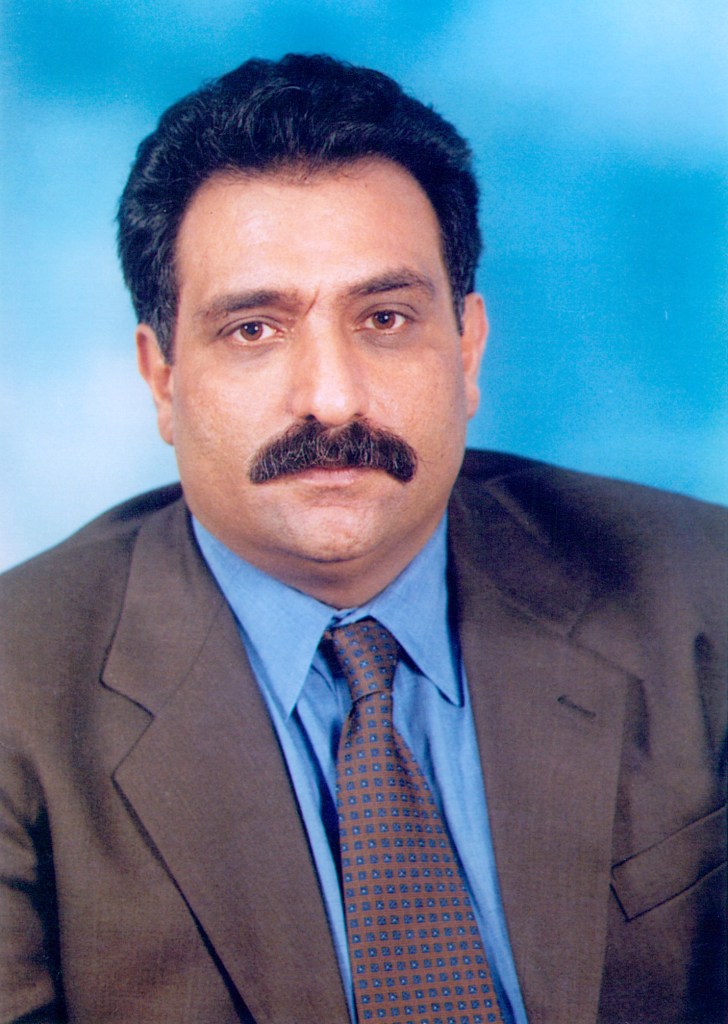
Photo credit: By Knesset Archives, CC BY-SA 4.0, https://commons.wikimedia.org/w/index.php?curid=156034141
Family History: The exile of the al-Missned family to Kuwait and their eventual return is a documented part of Qatari history (recorded in academic texts on the Gulf and Middle Eastern political history).
Professional Roles: Her work with the Qatar Foundation, her status as a UNESCO Envoy, and her role in Education City are documented on official government and NGO websites.
Succession History: The formal abdication of the former Emir, Sheikh Hamad, in favor of his son, Sheikh Tamim, in 2013 was a public global event covered by news outlets like the BBC, Al Jazeera, and The New York Times.
3. Key Names for Further Research
If you want to look deeper into these specific claims, you can search for these terms:
- “Alan Bender Deposition 2019”: To find the full 200+ page transcript.
- “Sheikh Khalid bin Hamad Al Thani Florida Lawsuit”: To see the context of the court case.
- “Qatar Foundation Leadership”: To see the official side of Sheikha Moza’s work.
Written with the help of Google AI.
 Writing by Dr. Dannielle Blumenthal
You must be logged in to post a comment.