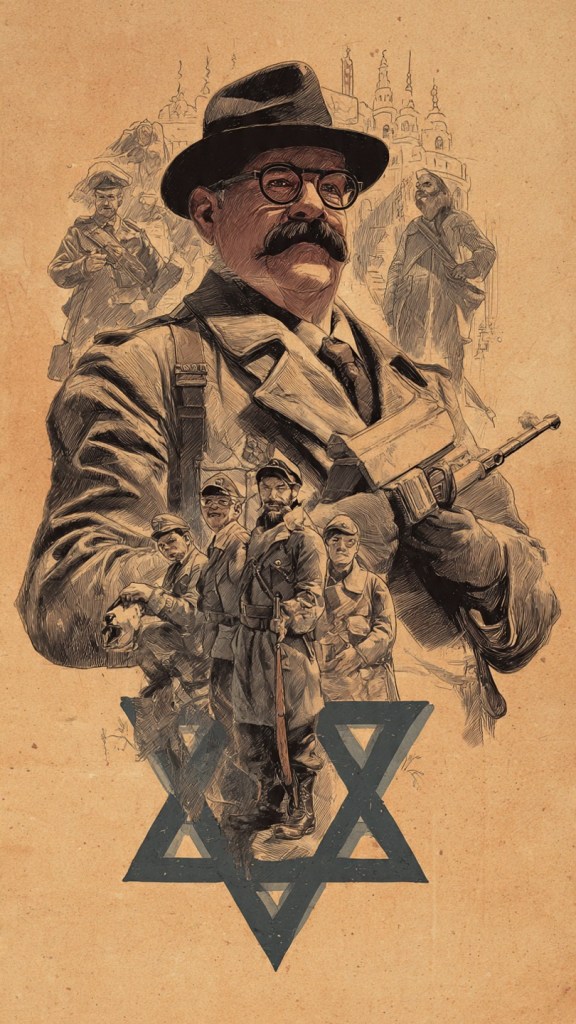
I. The New Landscape of Vulnerability: Mayor Mamdani’s First Actions and the Urgent Need for Resilience
As of January 2, 2026, New York City has entered a transformative era under Mayor Zohran Mamdani, sworn in on January 1 following his landmark election victory. The youngest mayor in over a century and the first Muslim and South Asian to hold the office, Mamdani moved swiftly on his first day, issuing executive orders prioritizing tenant protections and housing affordability while broadly revoking all orders issued by former Mayor Eric Adams after September 2024.
Among those revoked were measures adopting the International Holocaust Remembrance Alliance (IHRA) working definition of antisemitism, restrictions on protests near houses of worship, and prohibitions on city cooperation with BDS campaigns. While Mamdani retained the Mayor’s Office to Combat Antisemitism, these reversals have intensified concerns amid elevated antisemitic incidents in NYC and nationwide.
Critics have also highlighted Mamdani’s appointment of Ramzi Kassem—an attorney who previously represented an al-Qaeda–linked defendant—as chief counsel, raising questions about institutional signaling. Observers note the administration’s inclusion of Jewish appointees and allies, with some arguing this provides symbolic cover amid policies perceived as weakening protections for Jewish communities.
These steps reflect Mamdani’s long-standing positions, including criticism of IHRA and nuanced views on protest restrictions. Yet they underscore the vulnerabilities this playbook addresses: erosion of protective norms, shifts in civil rights enforcement, risks of signaling that could normalize hostility, and the instrumentalization of identity to deflect scrutiny.
What is unfolding in New York is not isolated. Across the United States, Jewish communities are confronting rising antisemitic incidents, normalization of extremist rhetoric, and political decisions that weaken long-standing civil rights protections. The pattern is national, not local: a regression in the norms that once safeguarded minority communities and upheld democratic resilience.
This essay adapts and expands upon Norm Eisen’s Playbook for Defending Democracy. While I disagree with Eisen’s politics, the framewo is useful. Here the focus is on applying its principles to the specific vulnerabilities facing Jewish communities today. The result is a seven-pillar framework designed not only to diagnose the threat landscape but to mobilize a coordinated, effective response.
II. Theory of Victory: What Success Looks Like
Victory is not abstract. It is measurable:
- Protective norms restored — including civil rights definitions, synagogue security standards, and constitutional safeguards
- Harmful policy shifts reversed — especially those that weaken protections or embolden extremist actors
- Institutional accountability re-established — ensuring that appointments, legal decisions, and public actions align with democratic principles
- Broad coalitions activated — interfaith, civic, corporate, and cross-partisan alliances that reject antisemitism and defend pluralism
- Jewish communal capacity strengthened — with leadership pipelines, security partnerships, and rapid-response infrastructure
Victory is the restoration of durable, self-reinforcing protections.
III. Tiered Action Prioritization
Tiering prevents overwhelm and ensures communities begin with the highest-leverage actions before building toward structural and long-term capacity.
Tier 1: Immediate, High-Impact
- Legal challenges to policies affecting synagogue security or civil rights enforcement
- Public education campaigns explaining the implications of repealing IHRA
- Rapid-response media and op-ed strategy
- Coalition-building with interfaith and civil rights partners
- Direct engagement with lawmakers and oversight bodies
- Establishing rapid-response communications teams
- Training designated spokespeople for media engagement
Tier 2: Medium-Term Structural
- Community security partnerships with law enforcement
- Ambassador programs training volunteers in advocacy and public communication
- Corporate and philanthropic partnerships supporting independent journalism
- Media-training programs for community leaders
- Poll-watching and election-monitoring initiatives
- Coalition communications protocols for coordinated messaging
Tier 3: Long-Term Capacity
- Leadership pipelines for Jewish community members entering public service
- Civic education programs for youth
- Sustained monitoring of extremist networks and disinformation ecosystems
- Institutionalizing community watch and security programs
- Building permanent interfaith and civic alliances
IV. The Seven Pillars
- Protect Elections and Democratic Norms
Democratic erosion often begins with the weakening of minority protections and the normalization of rhetoric that isolates vulnerable communities. Critics argue that efforts to repeal IHRA or permit targeted demonstrations near synagogues fit this pattern.
Strategic Actions
- Publish analyses on the impact of repealing IHRA
- Media appearances addressing synagogue-targeted demonstrations
- Build interfaith coalitions defending democratic norms
- Encourage Jewish leadership in electoral politics
- Train volunteers for poll-watching and election monitoring
- Develop rapid-response teams to counter election-related disinformation
- Defend Rule of Law and Institutional Integrity
The rule of law is only as strong as the institutions that uphold it. Concerns have been raised about appointments of individuals with controversial histories to senior legal roles, potentially shaping enforcement priorities and public trust.
Strategic Actions
- File ethics complaints and legal challenges
- Investigate appointments undermining hate-crime enforcement
- Mobilize support for judicial independence
- Strengthen law enforcement partnerships
- Train community leaders to speak publicly about rule-of-law issues
- Build legal advisory teams to monitor policy changes
- Fight Corruption and Opaque Networks
Antisemitism often emerges within networks of political opportunism, ideological extremism, and opaque funding streams.
Strategic Actions
- Investigate extremist-linked funding
- File FOIA requests and ethics probes
- Organize public demonstrations for transparency
- Train volunteers in open-source intelligence (OSINT) basics
- Build partnerships with investigative journalists
- Create a centralized corruption-monitoring hub
- Reinforce Civic and Media Space
Civic space contracts when governments delegitimize NGOs, weaken civil rights definitions, or permit targeted demonstrations near religious institutions.
Strategic Actions
- Media campaigns on synagogue safety
- Support independent journalism
- Challenge policies shrinking civic space
- Train spokespeople in crisis communication
- Develop media-training programs for rabbis, educators, and community leaders
- Establish a coalition press office for coordinated messaging
- Protect Pluralistic Governance
Pluralism is a structural safeguard. Critics argue that some political actors use Jewish appointees as symbolic cover while advancing policies perceived as harmful.
Strategic Actions
- Interfaith alliances rejecting tokenism
- Trainings for officials on identifying extremist infiltration
- Demonstrations for pluralism and inclusion
- Build cross-community solidarity campaigns
- Train community leaders in interfaith diplomacy
- Develop shared messaging frameworks with partner organizations
- Counter Disinformation and Narrative Manipulation
Disinformation is the accelerant of antisemitism. It reframes harmful policies as benign and erodes communal protections.
Strategic Actions
- Launch fact-checking and myth-busting campaigns
- Train volunteers to counter online hate
- Report coordinated campaigns
- Build a rapid-response digital team
- Develop a disinformation early-warning system
- Train spokespeople in narrative inoculation techniques
- Make Democracy Deliver for Jewish Communities
Communities lose faith in democracy when institutions fail to protect them. Policies that weaken synagogue security or repeal antisemitism definitions erode trust.
Strategic Actions
- Advocate for community security policies
- Build long-term law enforcement partnerships
- Highlight democratic institutions protecting vulnerable groups• For example: federal prosecutions of antisemitic hate crimes, or state-level grants for synagogue security
- Train community members in civic engagement
- Develop neighborhood-level safety networks
- Build pipelines for Jewish leadership in public service
V. Conclusion: A Blueprint for Resilience
This seven-pillar playbook is not a call for escalation; it is a call for coherence. Jewish communities have navigated centuries of shifting political landscapes, and the patterns are familiar: erosion of norms, weakening of protections, instrumentalization of identity, and the slow normalization of hostility.
The response must be strategic, unified, and grounded in democratic principles. By restoring protective norms, countering harmful policies, strengthening coalitions, and building long-term civic capacity, Jewish communities can ensure that the institutions meant to safeguard them remain worthy of trust.
This is not merely a defensive posture. It is a proactive blueprint for resilience — a model for how vulnerable communities can defend themselves while strengthening the democratic fabric of the nation.
Citation:
Adapted from Norm Eisen et al., The Democracy Playbook: Preventing and Reversing Democratic Backsliding, Brookings Institution, 2020.
Written with the help of Copilot/Gemini/Grok AI. Image by Mets AI.
 Writing by Dr. Dannielle Blumenthal
You must be logged in to post a comment.