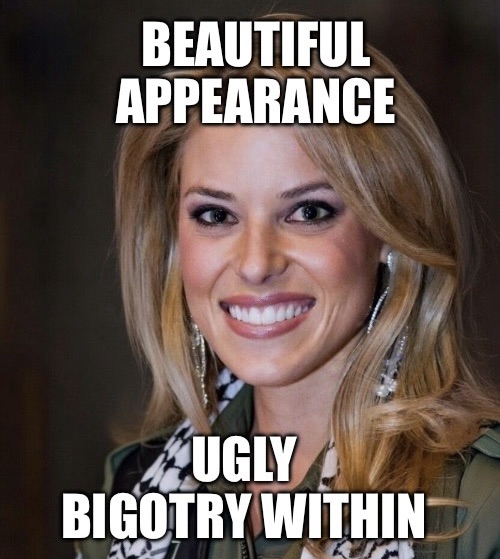
Carrie Prejean Boller is an American model and former Miss California USA who is currently a member of the Trump-appointed Religious Liberty Commission and a prominent conservative activist.
On February 9, 2026, during a high-profile hearing of the Religious Liberty Commission in Washington, D.C., Carrie Prejean Boller made several controversial statements regarding her Catholic faith, Zionism, and the war in Gaza.
Her remarks sparked a heated confrontation and have led to significant backlash within the commission and the broader political landscape.
Key Statements from Feb. 9, 2026
• On Zionism and Faith: She stated, “I am a Catholic, and Catholics don’t embrace Zionism.” She argued that as a Catholic, she does not believe the modern state of Israel has any “biblical prophecy meaning at all.”
• Defense of Candace Owens: She engaged in a sharp exchange with Seth Dillon (CEO of The Babylon Bee), demanding that people stop calling Candace Owens and Tucker Carlson antisemites, asserting that Owens simply “doesn’t support Zionism.”
• Challenge to Panelists: She repeatedly asked Jewish witnesses if they would consider her an antisemite for not supporting Israel, at one point asking, “Since we’ve mentioned Israel a total of 17 times, are you willing to condemn what Israel has done in Gaza?”
• Visual Symbolism: During the second half of the hearing, she reportedly wore a Palestinian flag pin on her lapel, further fueling the tension in the room.
Her comments are rooted in historical tensions.
For centuries, Christian Europe—including Catholic institutions, clergy, and lay culture—circulated theological and cultural ideas that portrayed Jews as spiritually obstinate, morally suspect, or collectively responsible for the death of Jesus. These narratives varied across time and place, but they formed a recognizable pattern: Jews were often depicted as powerful, conspiratorial, or resistant to Christian truth. This was classical Catholic antisemitism, and although the Church formally repudiated these teachings in 1965 with Nostra Aetate, cultural residues can persist long after doctrine changes.
Contemporary surveys show that U.S. Catholics overwhelmingly hold positive views of Jews (IJCR 2023). Yet historical narratives can still shape how modern political messages are received. This matters because pro-Palestinian propaganda aligned with Hamas—especially the versions that circulate on social media—sometimes deploys narratives that echo older European antisemitic motifs:
• portraying Jews or Israelis as uniquely malevolent
• framing Jewish power as global or manipulative
• depicting Jewish identity as inherently tied to oppression
These narratives are not representative of all pro-Palestinian advocacy, which includes many principled human-rights voices. But Hamas-aligned messaging often blends political critique with essentializing portrayals of Jews or Israelis, and these portrayals can unintentionally resonate with older Christian tropes.
For some Catholics—especially those unfamiliar with Jewish history or with the Church’s post-Vatican II teachings—this overlap can create a subtle interpretive bridge: humanitarian concern for Palestinians becomes entangled with inherited cultural patterns about Jewish power or culpability. This does not mean Catholics are antisemitic; rather, it highlights how historical memory shapes the emotional terrain on which contemporary political narratives land.
What Zionism Actually Is — and Its Historical Commitment to Coexistence
Zionism is often invoked in contemporary debate without clarity, so a brief definition is essential.
Zionism is the political movement that emerged in the late 19th century advocating Jewish national self-determination in the historic land of Israel. Its core claim is that Jews constitute a people with a right to political sovereignty and safety after centuries of persecution.
Crucially, the Zionist movement historically framed its goals around peaceful coexistence. From the early 20th century onward, mainstream Zionist leaders repeatedly endorsed partition plans, binational arrangements, or two-state frameworks, including:
• the 1937 Peel Commission partition proposal
• the 1947 UN Partition Plan
• multiple post-1948 land-for-peace frameworks
• the 1993–2000 Oslo process
In each case, Zionist leadership accepted or signaled willingness to negotiate, while Palestinian leadership—often under pressure from broader Arab states—rejected these proposals unilaterally, viewing partition as illegitimate or insufficient.
This historical pattern does not resolve today’s conflict, but it clarifies that Zionism, as a political movement, has long included coexistence-oriented and two-state strands, even as more nationalist or maximalist currents also existed.
Understanding this history matters because U.S. Catholics—who tend not to approach Israel through a theological lens—often evaluate the conflict through political and humanitarian frameworks (Pew 2022).
A Leftward Drift in U.S. Catholicism — and Its Intersection With Pro-Palestinian Activism
A second major context for understanding Catholic attitudes is the ongoing leftward shift among large segments of U.S. Catholics. Pew’s 2025 data show:
• 59% say abortion should be legal in all or most cases
• Catholics are now nearly evenly split in partisan identification
• 60% say the Church should be more inclusive even if that means changing some teachings (Pew 2025a; Pew 2025b)
Younger Catholics, Latino Catholics, and many college-educated Catholics lean more progressive on social issues, immigration, racial justice, and foreign policy. This places them in closer proximity to left-leaning coalitions in American public life—coalitions in which pro-Palestinian activism has become increasingly prominent since 2020.
This does not mean Catholics are adopting any single ideological line. Rather:
• Many younger Catholics encounter pro-Palestinian arguments through campus activism and digital media.
• Catholic social teaching’s emphasis on human dignity and proportionality resonates with humanitarian critiques of the Gaza war.
• Catholic clergy and religious orders have long histories of human-rights advocacy that shape how some Catholics interpret the conflict.
Combined with the historical dynamics described above, this helps explain why Catholics have moved from net-favorable to net-skeptical views of Israel during the Gaza war (Pew 2025; Times of Israel 2025), even while many still affirm Israel’s basic security rationale (Pew 2024).
America First Antisemitism Masquerading as Catholic Anti-Zionism
Jewish leaders at the hearing responded to Boller forcefully. They noted that denying Jewish self-determination while not applying the same standard to other peoples constitutes a discriminatory double standard historically associated with antisemitism (Jewish Insider 2026). Catholic commentators noted that Nostra Aetate explicitly condemns antisemitism while leaving political judgments about modern nation-states to prudential reasoning (America Magazine 2026).
Boller later defended conservative figures accused of antisemitism and criticized what she termed “Zionist supremacy,” arguing that Catholics should not be compelled to embrace Zionism as biblical prophecy (Daily Caller 2026; World Israel News 2026).
This controversy highlights how Catholic identity can be rhetorically mobilized within broader America First nationalist discourse, where opposition to Zionism is sometimes linked to claims about foreign influence or elite control—narratives that structurally resemble older antisemitic motifs even when speakers deny antisemitic intent.
Horseshoe Theory
This pattern reflects what political theorists describe as horseshoe theory: the tendency of ideological extremes to converge rhetorically.
• Far-right America First rhetoric frames Zionism as an external corrupting force.
• Far-left anti-Zionist rhetoric frames Zionism as uniquely illegitimate among nationalist movements.
Despite different moral vocabularies, both adopt similar narrative structures:
• portraying Zionism as singularly malevolent
• questioning Jewish political legitimacy
• framing Jewish identity through power rather than vulnerability
• treating Israel as exceptional among states
These narrative forms echo classical antisemitic tropes historically rejected by Catholic doctrine.
From a Clear Pro-Israel Lean to a More Divided Middle
A 2023 survey from Saint Joseph’s University’s Institute for Jewish-Catholic Relations (IJCR) finds Catholics spread across the spectrum: 34.8% support Israel, 11.4% support Palestine, and a majority express equal sympathy (IJCR 2023). This contrasts with white evangelical Protestants, who remain overwhelmingly pro-Israel (Pew 2022).
Warm Views of Jews, But Weak Theological Zionism
U.S. Catholics hold broadly positive views of Jews—89.4% express a very good, good, or neutral opinion (IJCR 2023). But only 25% believe God granted the land of Israel to the Jewish people, compared with 70% of white evangelicals (Pew 2022).
Preferences on Solutions: A Plurality for Two States
In 2022, 42% of Catholics favored a two-state solution (Pew 2022), aligning with IJCR findings that Catholics cluster in the political middle (IJCR 2023).
Before October 7: Moderately Favorable Toward Israel
In August 2023, 58% of Catholics viewed Israel favorably (Pew 2023).
After October 7: Support for Israel’s Reasons, Growing Skepticism
In March 2024, 61% said Israel’s reasons for fighting Hamas were at least somewhat valid (Pew 2024). By early 2025, 53% viewed Israel unfavorably (Pew 2025; Times of Israel 2025).
Looking Ahead: How Emerging Information About Hamas May Shift Catholic Opinion Again
As reporting continues, more information has emerged about Hamas’s ideology and governance:
• commitment to armed struggle over coexistence
• rejection of peace frameworks
• use of civilian infrastructure
• influence on Palestinian media and education
For many Catholics grounded in humanitarian concern, clearer distinction between Palestinian civilians and Hamas’s political-military agenda may prompt renewed reassessment (Pew 2025).
Catholic opinion has already shifted once in response to humanitarian suffering. It may shift again in response to deeper understanding of Hamas’s role and strategy.
The story remains pluralistic, conflicted, and evolving.
References
America Magazine.
“Catholic member of Trump’s Religious Liberty Commission sparks tense exchange over antisemitism and Israel.” Feb. 10, 2026.
Daily Caller.
“Trump’s Religious Liberty Commission Goes Off the Rails With Panelists at Each Others’ Throats.” Feb. 10, 2026.
World Israel News.
“Ex-model appointed by Trump to religious freedom panel defends Candace Owens, rips ‘Zionist supremacy’.” Feb. 10, 2026.
Jewish Insider.
“Trump religious liberty panel’s first antisemitism hearing turns contentious over Israel.” Feb. 10, 2026.
Institute for Jewish-Catholic Relations (IJCR).
“First-of-its-kind survey reveals American Catholics’ attitudes toward Jews have improved.” 2023.
Pew Research Center.
“Modest warming in U.S. views on Israel and Palestinians.” 2022.
Pew Research Center.
“Views of the Israel-Hamas war.” 2024.
Pew Research Center.
“How Americans view Israel and the Israel-Hamas war at the start of Trump’s second term.” 2025.
Times of Israel.
“Most Americans don’t want the U.S. to take over Gaza, Pew survey finds.” 2025.
https://www.timesofisrael.com/most-americans-dont-want-the-us-to-take-over-gaza-pew-survey-finds/
Anti‑Zionism claim by Catholic panelist prompts sharp exchange at Religious Liberty Commission – EWTN News
Religious liberty panel hearing on Jew-hatred at times digressed to opposing Israel – Times of Israel
Catholic member of Trump’s Religious Liberty Commission sparks tense exchange – America Magazine
Is Spite of What Zionists Say, It’s a Good Thing to Criticize Governments – Mises Institute
https://mises.org/power-market/spite-what-zionists-say-its-good-thing-criticize-governments
Written with the help of AI. AI modified image.
 Writing by Dr. Dannielle Blumenthal
You must be logged in to post a comment.