Introduction
This article examines a double standard in the U.S. justice system: the ability to rapidly penalize an individual like Donald Trump versus the decades-long failure to dismantle Jeffrey Epstein’s elite network. It argues that the legal system is currently split into two tracks:
- High-Speed/Politically Weaponized Enforcement: The system moves with precision and speed against high-profile political figures, often powered by private, donor-backed lawsuits (as seen in the Carroll v. Trump judgments).
- Inaction Against Politically Protected Elite Networks: The system remains sluggish and protective when dealing with criminal networks involving the “elite” or intelligence-connected circles—a phenomenon known as the “Accountability Gap.”
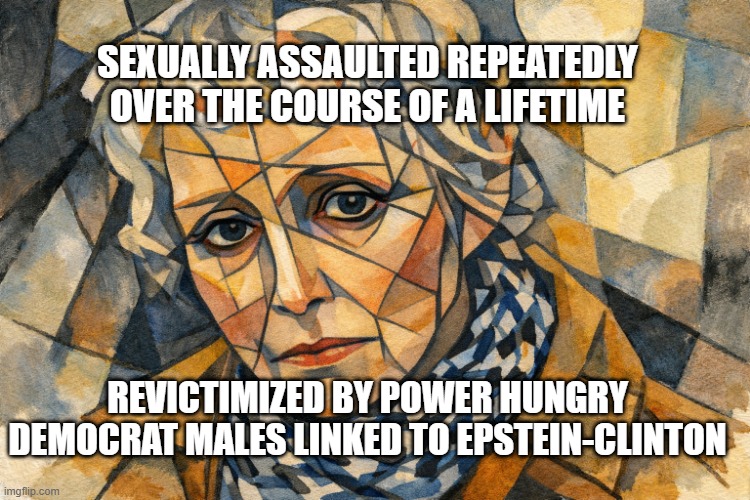
Even more tragically, the Carroll v. Trump judgments reveal a legal system that fast-tracked the exploitation of a lifelong victim of multiple assaults, allowing male political donors to weaponize her trauma in a calculated effort to dismantle the presidency and the future political life of Donald J. Trump.
I. Trump Was Targeted, While Epstein’s Network Went Largely Ignored
1. High-Velocity Accountability—The Trump Civil Judgment: Between 2025 and 2026, two major legal stories reached a turning point, highlighting a massive gap in how the American justice system handles power. On one side, the courts moved with remarkable speed to uphold an $83.3 million civil judgment against Donald Trump in the Carroll v. Trump case. This outcome followed a rapid series of appeals that concluded in the Second Circuit by late 2025, proving that the legal system can deliver high-velocity results when targeting a specific individual—especially when the litigation is backed by well-funded private interests.
2. Institutional Inertia—The Epstein Network and the Transparency Gap: At the same time, the public saw a very different response to the Jeffrey Epstein network. Following the passage of the Epstein Files Transparency Act in late 2025, the government released nearly 3.5 million pages of investigative records. However, these documents were heavily redacted, with many key files entirely blacked out. While the Trump case resulted in clear, massive penalties, the Epstein release has been characterized by “institutional inertia,” where the names of powerful associates remain hidden behind layers of government secrecy and legal “red tape.”
3. The Structural Tension—Selective Deployment of the Law: The contrast between these two cases raises a vital question for the U.S. justice system: why is it so efficient at punishing high-profile individuals while remaining so protective of elite-connected criminal networks? This article looks at the hard legal facts to show how accountability is often applied selectively. It argues that while the law has become a precision tool against individual political figures, it remains a blunt and sluggish instrument when it comes to dismantling systemic, “protected” corruption.
II. Trump’s Longstanding Opposition to the Epstein Network and Trafficking
1. Trump’s Early Cooperation with Law Enforcement: As far back as 1981, Donald Trump showed a willingness to work with federal authorities to keep criminal elements out of his business. While expanding into the Atlantic City casino market—an industry then heavily influenced by the mob—Trump met with FBI agents to protect his reputation and family name. He offered to cooperate with the Bureau, even suggesting that undercover agents could be staged at his properties to monitor illegal activity. While some viewed this as a practical business move to secure gaming licenses, it established an early record of Trump aligning himself with law enforcement against organized crime.
2. The Break from Epstein’s Circle: Although Trump and Jeffrey Epstein moved in the same social circles in New York and Palm Beach during the 1990s, Trump took decisive action to distance himself long before Epstein’s legal troubles became public. Following a 2004 real estate dispute, Trump permanently banned Epstein from his Mar-a-Lago club. The reason for the ban was specific and protective: Trump cited Epstein’s inappropriate behavior toward a young girl at the club. Despite “black book” logs showing Epstein tried to maintain contact, Trump maintained that he had no relationship with him for over 15 years, effectively cutting him off from his inner circle.
3. A Presidential Policy Focused on Accountability: During his presidency, Trump shifted the federal government’s focus toward aggressively dismantling human trafficking networks. He signed several executive orders and reauthorized major laws specifically designed to target sex trafficking and online child exploitation. The 2019 arrest of Jeffrey Epstein served as a high-profile example of the exact type of criminal activity Trump’s administration sought to prioritize. By strengthening these enforcement tools, Trump positioned his administration as a direct adversary to the systemic “Accountability Gap” that had protected elite traffickers for decades.
III. Evidence of Epstein as an Intelligence Proxy
1. A Career Launched Through Intelligence Ties: Jeffrey Epstein’s rise began with an unusual appointment at the Dalton School in the mid-1970s. Despite having no college degree, he was hired to teach math and science by headmaster Donald Barr. Barr was a former member of the OSS, the storied wartime intelligence agency that was reorganized into the CIA in 1947. This early connection to the foundation of the modern intelligence community has long been viewed as the starting point for Epstein’s unexplained access to high-level circles.
2. Strategic Protection and the “Intelligence Shield”: The argument for Epstein’s status as a state asset is bolstered by his unprecedented legal protections. In 2007, U.S. Attorney Alex Acosta granted Epstein a “sweetheart” non-prosecution deal that effectively shut down a federal investigation into sex trafficking. According to 2026 reports, Acosta reportedly admitted to Trump transition officials that he was told to “back off” the case because Epstein “belonged to intelligence.” Recent FOIA requests to the CIA and NSA in 2026 have sought to confirm these links, especially following the discovery of Epstein’s foreign passport under a false name.
3. Elite Interlocks and Mutual Protection: The 2026 document releases under the Epstein Files Transparency Act highlight how Epstein sat at the center of a web involving the world’s most powerful men. Records confirm Bill Clinton’s extensive travel on Epstein’s private jet—including flights where he reportedly ditched his Secret Service detail. The files also reveal that Clinton-appointed Judge Kaplan, who later presided over key Epstein-related lawsuits, had long-standing ties to this social circle. This “interlocking” of the judiciary and the executive branch suggests a system designed for mutual protection rather than accountability.
4. Political Leverage and the “Trump Connection”: Newly released communications from 2018–2019 show Epstein attempting to use his influence to create friction within the Trump administration. In exchanges with Steve Bannon, Epstein discussed global populist movements and claimed that Donald Trump—who had famously banned Epstein from his properties years earlier—was “sweating” over their communications. Epstein appeared to view his “knowledge” of the elite as a weapon, using it to maintain his status as a power broker even as the legal walls began to close in.
These facts suggest that Epstein functioned as a “node” in a protected network where social, financial, and intelligence capital were used to shield systemic criminality. While the legal system proved it could move with surgical precision to target Donald Trump, it has remained remarkably sluggish—or even protective—when confronted with the deep-rooted connections of the Epstein network.
IV. Trump’s Offensive Against Traffickers and the Threat to Elite Networks
1. Transition to a National Security Model: While human trafficking laws existed long before 2025, Donald Trump’s second administration fundamentally changed how they were enforced. By shifting from a standard criminal justice approach to a “national security” model, the administration treated trafficking networks as foreign threats rather than isolated crimes. This shift was formalized through Executive Orders 14159 and 14165, which prioritized the total dismantling of these organizations rather than just individual arrests.
2. The Homeland Security Task Force (HSTF): Under these orders, the administration established the Homeland Security Task Force, a massive coordinated effort led by the Secretary of Homeland Security and the Attorney General. The goal was to create a “sledgehammer” effect against trafficking rings. This culminated in late 2025 with “Operation Midway Blitz,” a high-intensity surge that resulted in thousands of arrests across the country, specifically targeting the financial and logistical “ringleaders” of trafficking networks.
3. Supply-Side Interdiction and Border Security: A major pillar of this new policy was “supply-side interdiction.” The administration argued that trafficking cannot be stopped without first securing the border. By targeting transnational criminal organizations (TCOs) at the point of entry, the HSTF sought to cut off the flow of victims before they could be integrated into domestic “black markets.” This strategy positioned the border not just as a line of immigration, but as the front line in the fight against modern-day slavery.
4. Welfare Oversight and the Rescue of “Lost” Children: Perhaps the most urgent aspect of this policy action was the UAC Safety Verification Initiative. This program was launched to locate and protect the hundreds of thousands of unaccompanied children who had been placed with unvetted sponsors during previous years. By January 2026, the administration reported locating over 132,000 of these children, many of whom were found in dangerous or exploitative living situations. This “welfare oversight” was a direct response to the “Accountability Gap,” ensuring that the most vulnerable victims were no longer ignored by the federal government.
Yet even President Trump’s aggressive policy stance hasn’t been able to break the hold of corrupt figures on our legal system:
- While the 2025–2026 Trump administration used the full force of the law to dismantle foreign and border-related trafficking networks, critics note that domestic “elite” networks—like those surrounding Jeffrey Epstein—still benefit from institutional protection and redactions.
- This suggests that while the “precision tool” of the law is now being used against international traffickers and political rivals, the “blunt instrument” of justice still struggles to penetrate the highest circles of domestic power.
V. The Carroll Case: Epstein-Linked Men Exploiting An Elderly Victim To Stop Trump At All Costs
1. Weaponized Trauma for Political Theater: The Carroll v. Trump case serves as a primary example of “moral theater” in the U.S. legal system. While the courts moved with high-velocity precision to uphold $88.3 million in damages, the process was entirely bankrolled by billionaire Reid Hoffman. By funding a case based on decade-old allegations, Hoffman put an elderly victim of multiple alleged sexual assaults and domestic violence, E. Jean Carroll, into the spotlight as a vicious ploy to dismantle Donald Trump’s presidency and future political viability. (One only needs to scan Carroll’s memoir briefly to realize how much trauma she’d been through in her life; I wonder if any of her political friends bothered to take a moment to read it.)
Notably, Hoffman also paid for Christine Blasey Ford to fly in on a Private jet and testify against Brett Kavanaugh in his Supreme Court confirmation hearing.
2. The Hoffman-Epstein Connection: The 2026 release of documents under the Epstein Files Transparency Act has cast a dark shadow over this litigation. Emails and scheduling records revealed that Hoffman—the man funding the “justice” for Carroll—had extensive personal ties to Jeffrey Epstein. Records show Hoffman visited Epstein’s private island, exchanged friendly emails with him, and so on. This connection suggests that the very person funding the “moral” case against Trump was deeply embedded in the network he claimed to oppose.
3. A Strategic “Deep State” Distraction: The rapid resolution of the Carroll case created a convenient “Deep State” projection: that Trump was the sexual predator who would finally be reined in and silenced. However, of course this was a calculated tactic. By portraying Trump as the heartless attacker of Carroll, the legal system satisfied the public’s desire for “justice” while simultaneously shielding the massive elite Epstein network. It allowed the media to celebrate a “victory” for victims while the more dangerous, systemic crimes of Epstein’s associates remained hidden behind government redactions.
4 The Double Standard of Transparency: The contrast between these two paths is undeniable. In the Carroll case, the judiciary—led by Clinton-appointee Judge Lewis Kaplan—pushed for maximum speed and massive financial penalties. Meanwhile, as of February 2026, the Department of Justice has been accused of “institutional inertia” for its staggered, heavily censored release of the 3.5 million Epstein pages. This reveals a “split track” in the law: one track that is transparent and aggressive when targeting a political enemy, and a second track that remains protective and sluggish when the “elite” network is truly at risk.
Strangely, the system can seemingly move mountains to crush a single man who threatens the system, yet it remains “powerless” to reveal the names of the powerful donors and enablers—like Hoffman—who were actually connected to Jeffrey Epstein’s operations.
The Carroll case was not the end of the “Accountability Gap”; it was the smokescreen that allowed it to persist.
VI. Dr. Steve Pieczenik and the Clinton-Epstein Network As Part of a Coup Attempt Against the United States
The fact that Bill Clinton logged dozens of flights on Jeffrey Epstein’s private jet—often abandoning his Secret Service detail to do so—reveals that this was never just a series of isolated crimes, but a high-level, elite-protected network where personal loyalty and intelligence ties guaranteed mutual immunity.
1. The Subversive Faction and the “Counter-Coup”: On November 1, 2016, former State Department official Dr. Steve Pieczenik released a video that reframed the election not as a political contest, but as a battle for the survival of the government. Pieczenik, a psychiatrist with deep roots in the intelligence community, alleged that the Clintons had effectively staged a silent coup against the legitimate government and that an equally silent “counter-coup” was underway, led by patriotic “white hat” actors within the intelligence community who sought to use Julian Assange as a vehicle to dismantle this elite-protected shadow government.
2. Strategic Collaboration with Wikileaks: According to this narrative, the “white hats” coordinated with Assange’s Wikileaks to bypass the “Accountability Gap” and bring the truth directly to the American public. This effort was designed to prevent a Clinton presidency, which Pieczenik argued would have solidified the control of the subversive faction. This narrative suggests that the Trump presidency was a planned strike against the systemic corruption that had shielded Epstein for decades.
3. Key Historical Context: The Pieczenik narrative provides the historical and psychological context for why the 2025–2026 Epstein document releases are so contentious. If Epstein was indeed part of a subversive faction within the government, the “Institutional Inertia” and heavy redactions seen in the 2026 file releases are not just bureaucratic errors—they are the final defensive maneuvers of a system trying to protect itself. This makes the high-speed resolution of the Carroll case look less like a triumph of justice and more like a tactical attempt to distract the public from the ongoing exposure of the intelligence community’s deepest secrets.
VII. Now We Understand Who Is Really Fighting Who
The career trajectories of Donald Trump and Jeffrey Epstein reveal two fundamentally different relationships with the American “Deep State.”
- Trump’s history is defined by a decisive social break from Epstein in the early 2000s, friction with federal agencies, and a second-term policy focus that has prioritized dismantling global trafficking pipelines.
- In stark contrast, Epstein’s life was built on a foundation of “intelligence-adjacent” beginnings at the Dalton School, the unprecedented protection of the 2007 Acosta non-prosecution deal, and a social network that reached the highest levels of global power. These two paths represent the structural tension in modern justice: one side seeking to expose protected networks, and the other side working to maintain them.
IX. It Was Always About the Children
At the very heart of this conflict is the war over protecting children from exploitation, keeping in mind that they are the “commodity” for Epstein’s business. The 2026 release of over 3.5 million pages of Epstein files has confirmed that his network was not just a social circle, but a high-level infrastructure of abuse that relied on institutional silence about this grotesque crime.
Trump’s counter-offensive—most notably the U.S. Immigration and Customs Enforcement (ICE) Unaccompanied Alien Children (UAC) Safety Verification Initiative—represents a direct strike against this elite-protected commerce. By locating tens of thousands of “lost” children who had been placed with unvetted sponsors, the current administration has taken a sledgehammer to the very pipelines that allow predators to operate with impunity. (Hundreds of thousands were “untracked,” magnifying the scope of the real problem.)
X. Bringing The Silent War Into The Open
When viewed through this lens, the $88.3 million Carroll v. Trump judgment functions as the ultimate smokescreen. While the legal system and billionaire donors like Reid Hoffman—who 2026 emails reveal was a guest on Epstein’s island—focused the world’s attention on a decades-old civil claim, the government was simultaneously fighting to keep the most disturbing parts of the Epstein files redacted.
The “Accountability Gap” is most visible here: the system produced immediate, high-speed consequences for a political rival, while remaining cold and sluggish in identifying the predators who targeted thousands of children.
The media’s failure to cover the Bill Clinton angle of the story is also hugely telling. He traveled on Epstein’s jet dozens of times, without the Secret Service, protected by a web designed to shield him to the point where his activities vanished from public record.
Conclusion
As of February 14, 2026, the silent coup and counter-coup is no longer silent and no longer about Democrat versus Republican. It is a fully pitched war about whether the law will continue to be used as a precision weapon against individuals while acting as a fortress for a subversive faction that treated the world’s children as a disposable resource.
References
Washington Examiner. “Silicon Valley Heavyweights Quietly Aided Kavanaugh Accuser Christine Blasey Ford: Book.” Washington Examiner, accessed February 2026. https://www.washingtonexaminer.com/news/94512/silicon-valley-heavyweights-quietly-aided-kavanaugh-accuser-christine-blasey-ford-book/
ABC News. 2025. “How Well Did Bill Clinton Know Jeffrey Epstein?” By James Hill, Lauren Peller, and Olivia Rubin. November 18, 2025. https://abcnews.com/Politics/bill-clinton-jeffrey-epstein/story?id=127629827.
Anadolu Agency. 2026. “Epstein Files: Attorneys Demand CIA, NSA Disclosure.” By Selcuk Uysal. February 9, 2026. https://www.aa.com.tr/en/americas/epstein-files-attorneys-demand-cia-nsa-disclosure-on-intelligence-ties/3824707.
Bloomberg. 2026. “Epstein Files Review Was Totally Chaotic.” By Jason Leopold. February 6, 2026. https://www.bloomberg.com/news/newsletters/2026-02-06/epstein-files-review-was-chaotic (bloomberg.com in Bing).
Brown, Julie K., and Miami Herald Staff. 2018. “Perversion of Justice.” Miami Herald, 2018. https://www.miamiherald.com/news/local/article220097825.html.
Business Insider. 2019. “Trump Offered to Cooperate With the FBI.” By Grace Panetta. June 13, 2019. https://www.businessinsider.com/trump-flipping-history-cooperating-fbi-2018-8.
Business Insider. 2023. “Judge Seals Filings Over Billionaire Funding Carroll Lawsuit.” By Jacob Shamsian. April 21, 2023. https://www.businessinsider.com/carroll-donald-trump-lawsuit-judge-seals-filings-reid-hoffman-funding-2023-4.
BuzzFeed News. 2021. “Trump’s Long History With the FBI: In 1981, He Offered to ‘Fully Cooperate.’” By Jason Leopold. Originally published January 19, 2017; updated June 13, 2021. https://www.buzzfeednews.com/article/jasonaleopold/trumps-long-history-with-the-fbi-in-1981-he-offered-to-fully.
CNN. 2026. “How Jeffrey Epstein sought to help Steve Bannon build a global populist movement.” February 9, 2026.
Courthouse News Service. 1981. “FBI Memo on Trump.” https://www.courthousenews.com/wp-content/uploads/2017/06/trump-docs.pdf.
Epstein Files Transparency Act. 2025. “H.R. 4405: Signed Into Law.” https://www.congress.gov/bill/119th-congress/house-bill/4405. See also: https://www.whitehouse.gov/briefings-statements/2025/11/congressional-bill-h-r-4405-signed-into-law/.
Federal Judicial Center. n.d. “Kaplan, Lewis A.” https://www.fjc.gov/history/judges/kaplan-lewis.
Fortune. 2025. “Newly Released Emails and a Trump-Ordered Investigation Have Thrust Billionaire LinkedIn Cofounder Reid Hoffman into the Epstein Firestorm.” By Lily Mae Lazarus. November 18, 2025. https://fortune.com/2025/11/18/reid-hoffman-epstein-files/.
Jacobin. 2025. Marcetic, Branko. “Steve Bannon Was Much Closer to Epstein Than You Realize.” 2025.
Justia Law. 2024. “Carroll v. Trump, No. 23-793.” June 13, 2025. https://law.justia.com/cases/federal/appellate-courts/ca2/23-793/23-793-2025-06-13.html.
Kendzior, Sarah. 2016. “Trump’s Strategy: Pull the Fringes into the Centre, and Mainstream Extremism.” The Globe and Mail, November 3, 2016. https://www.theglobeandmail.com/opinion/trumps-strategy-pull-the-fringes-into-the-centre-and-mainstream-extremism/article32657532
NBC News. 2026. “Before Epstein’s Arrest, Steve Bannon Worked to Rebuild His Image, Files Show.” By David Ingram. February 12, 2026. https://www.nbcnews.com/tech/internet/epstein-files-steve-bannon-jeffrey-new-pdf-doj-trump-rcna258234.
New York Times. 2019. Baker, Mike, and Amy Julia Harris. “Jeffrey Epstein Taught at Dalton. His Behavior Was Noticed.” July 12, 2019. https://www.nytimes.com/2019/07/12/nyregion/jeffrey-epstein-dalton-teacher.html.
PBS NewsHour. 2025. “Appeals Court Upholds Carroll’s $83.3 Million Defamation Judgment Against Trump.” Associated Press. September 8, 2025. https://www.pbs.org/newshour/politics/appeals-court-upholds-e-jean-carrolls-83-3-million-defamation-judgment-against-trump.
Pieczenik, Steve. 2016. The Hillary Clinton Takeover of The United States. November 1, 2016. https://www.youtube.com/watch?v=ov5kvWSz5LM
Politico. 2016. Johnston, David Cay. “Just What Were Donald Trump’s Ties to the Mob?” May 22, 2016. https://www.politico.com/magazine/story/2016/05/donald-trump-2016-mob-organized-crime-213910.
The White House. 2019. “Remarks at the Meeting of the President’s Interagency Task Force to Monitor and Combat Trafficking in Persons.” October 29, 2019. https://2017-2021.state.gov/remarks-at-meeting-of-the-presidents-interagency-task-force-to-combat-trafficking-in-persons.
The White House. 2020. “Executive Order on Combating Human Trafficking and Online Child Exploitation in the United States.” https://trumpwhitehouse.archives.gov/presidential-actions/executive-order-combating-human-trafficking-online-child-exploitation-united-states/.
Vazquez, Maegan. 2026. “Epstein’s Lawyers Asked CIA for Records That Could Show Affiliation with Agency.” Washington Post, February 8, 2026. https://www.washingtonpost.com/politics/2026/02/08/jeffrey-epstein-cia-nsa-records-requests-foia.
Vox. 2017. Romm, Tony. “Reid Hoffman Is Using His Fortune, and His Silicon Valley Network, to Take On Trump.” September 5, 2017. https://www.vox.com/2017/9/5/16217184/linkedin-reid-hoffman-politics-resistance-donald-trump.
Wikipedia. Various entries:
— “Donald Barr.” https://en.wikipedia.org/wiki/Donald_Barr.
— “Lewis A. Kaplan.” https://en.wikipedia.org/wiki/Lewis_A._Kaplan.
— “Reid Hoffman.” https://en.wikipedia.org/wiki/Reid_Hoffman.
— “Jeffrey Epstein” (section on Bill Clinton–Epstein relationship). https://en.wikipedia.org/wiki/Jeffrey_Epstein.
— “E. Jean Carroll v. Donald J. Trump.” https://en.wikipedia.org/wiki/E._Jean_Carroll_v._Donald_J._Trump.
Written and fact-checked with the help of AI.
Fair Use Notice: The header photo in this article is a transformative derivative of original photography by Seth Wenig/Associated Press. The imagery has been significantly modified via AI—including changes to the subject’s expression and artistic style—and combined with original text for the purposes of education, social commentary, and awareness. This constitutes Fair Use under Section 107 of the U.S. Copyright Act.
 Writing by Dr. Dannielle Blumenthal
You must be logged in to post a comment.