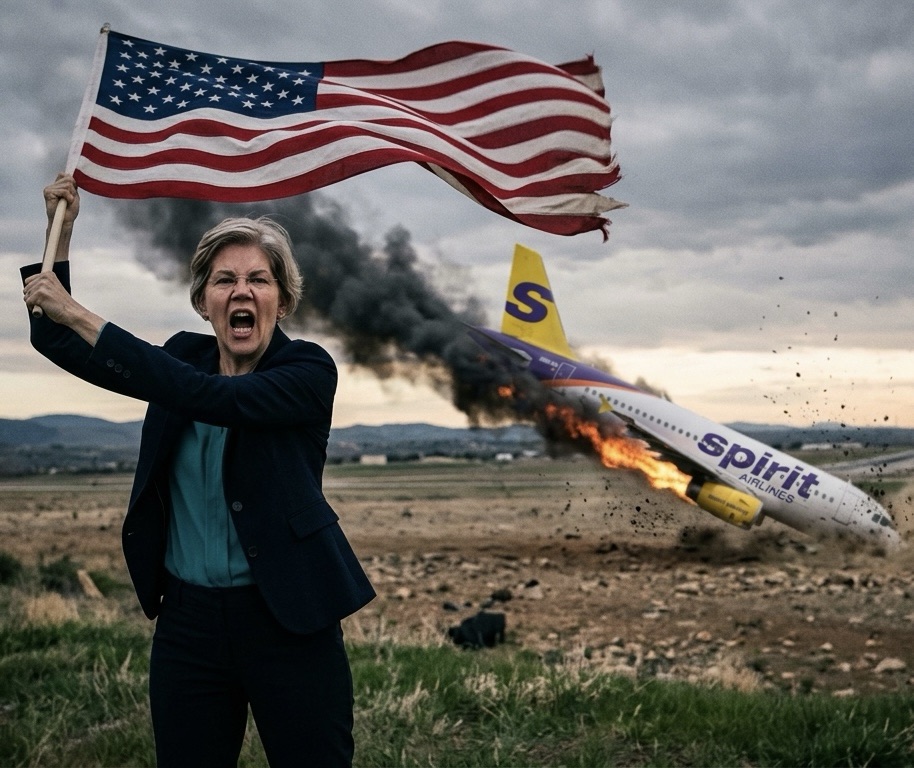
At 3 a.m., Spirit Airlines shut down operations, marking the end of a major ultra–low-cost carrier in the U.S. market. The immediate effects are significant: approximately 14,000 jobs lost and reduced service to dozens of smaller airports that relied on low-cost routes.
This outcome follows a series of policy decisions that reshaped the airline’s trajectory. In 2022, JetBlue proposed a $3.8 billion acquisition of Spirit. The deal was approved by shareholders and supported by key labor groups. The combined airline would have held a relatively small share of the market compared to the dominant “Big Four” carriers.
However, the merger faced strong opposition from policymakers, including Elizabeth Warren, and was ultimately blocked after a lawsuit by the U.S. Department of Justice under the Joe Biden administration. In early 2024, a federal judge ruled against the merger, citing concerns that it could lead to higher prices for consumers.
The policy rationale centered on protecting competition. But the subsequent collapse of Spirit raises questions about how competition is defined and preserved in practice.
In the months following the blocked merger, Spirit reduced routes, furloughed employees, and ultimately ceased operations. The effects extend beyond the airline itself—impacting contractors, airport workers, and local businesses tied to its network. When a low-cost carrier exits a market, the competitive pressure it exerted often disappears with it.
Historically, budget airlines have played a measurable role in lowering fares across routes. Their presence can influence pricing even among larger carriers. Without that presence, consumers may face fewer low-cost options, particularly in smaller or underserved markets.
This is where the role of public rhetoric becomes relevant. Statements characterizing outcomes like this as a “win for consumers” can appear disconnected from the immediate economic consequences experienced by workers and communities. While policymakers often rely on economic modeling and long-term projections, those frameworks do not always capture the operational realities of running a business in a competitive, capital-intensive industry.
Critics argue that this gap—between theoretical outcomes and business realities—can lead to unintended consequences. Airlines operate on thin margins, complex logistics, and high fixed costs. Decisions that limit strategic options, such as mergers, can constrain a company’s ability to adapt or survive in a volatile market.
None of this suggests that all mergers should be approved or that antitrust concerns are misplaced. Rather, it highlights the importance of grounding regulatory decisions—and the language used to defend them—in a clear understanding of how industries function in practice.
The collapse of Spirit Airlines illustrates a broader tension in economic policy: the challenge of balancing consumer protection with the viability of the competitors meant to serve them.
In that balance, both decisions and messaging matter.
Written with the help of AI. AI image.
 Writing by Dr. Dannielle Blumenthal
You must be logged in to post a comment.