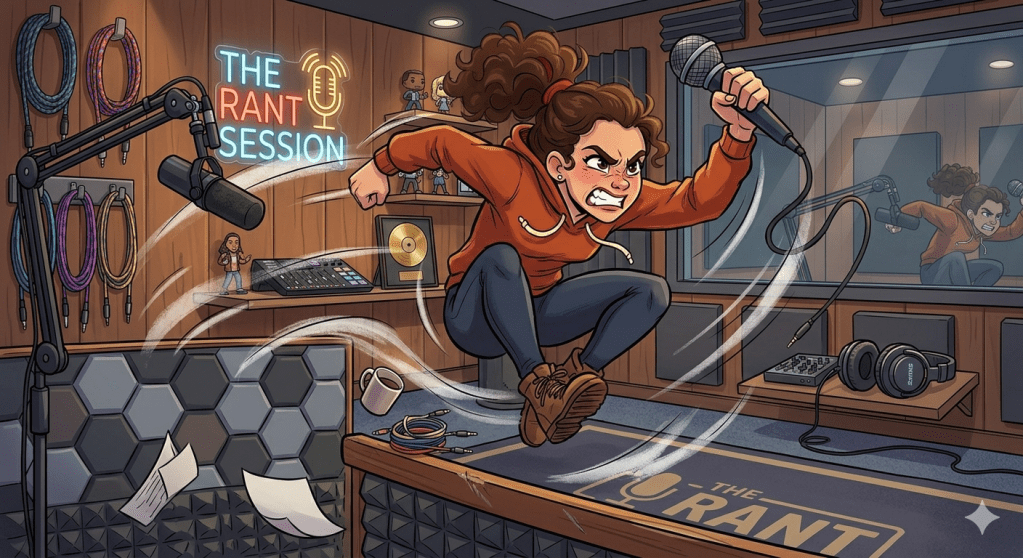
Have you ever noticed a confusing pattern on your social media feed? A high-profile creator builds their entire brand around being a “defender of the weak,” a “truth-teller,” or a “champion for justice.” They look directly into the camera in intense, emotional close-ups, or speak with absolute moral authority.
But then, the pattern turns dark. They constantly find individual “enemies” to attack. They claim these enemies are toxic, dangerous, or part of a conspiracy, and they encourage their followers to go harass them.
While this looks like everyday internet politics or drama, it represents a highly specific, dangerous online behavior pattern. Because there is no formal medical name for this digital phenomenon, I am introducing a coined, conceptual term to describe it: Narcissistic Sociopathic Champion Syndrome (NSCS).
To be absolutely clear, NSCS is not a recognized clinical or psychological syndrome. It is not found in the DSM-5-TR or any standard diagnostic manual. Instead, it is a sociological and rhetorical framework used here to illustrate a specific cluster of online behaviors that warrant closer investigation.
Deconstructing the Conceptual Framework
While NSCS is a newly coined label, it combines several well-established psychological concepts to explain how toxic behavior manifests in the digital age:
1. The “Narcissistic” Core: The Need for Praise
People with narcissistic traits possess a fragile ego and a severe need for constant admiration. In this framework, they satisfy this need through Communal Narcissism—getting their ego fed by acting like the most moral, caring person in the room (Casale & Banchi, 2020). Because their ego is so fragile, they experience a “narcissistic injury” when faced with criticism. Lacking the internal mechanism to process pushback, they immediately frame the critic as an objective villain.
2. The “Sociopathic” Behavior: Cruelty and Proxy Harm
The sociopathic or antisocial element involves a lack of empathy, deceitfulness, and a disregard for the safety of others. Research shows that individuals with psychopathic traits readily utilize online spaces for cyberbullying and trolling without feeling guilt (Perenc, 2022). A creator acting out this pattern uses a manipulation tactic called proxy recruitment (mobilizing “flying monkeys”). They use their intense videos to form a deep emotional bond with their audience, then point that audience at a target like a weapon.
3. The “Champion” Mask: Righteous Framing
This overlaps significantly with histrionic traits—dramatic emotional displays to capture attention—and malignant narcissism (Torrico et al., 2024). By wrapping themselves in the flag of a good cause, the influencer successfully hides their cruelty in plain sight. They trick their followers into thinking that targeted online bullying is actually “righteous anger” or “seeking justice.” The followers genuinely believe they are helping a hero, unaware that they are being used as a digital hit-squad.
Why the “Champion” Mask Works: The Element of Truth
It is crucial to note that these figures gain traction precisely because some of their critiques are entirely accurate. They do not operate in a vacuum of pure falsehood. Often, the institutions, media apparatuses, or ideological movements they attack genuinely deserve intense public scrutiny.
Furthermore, not every individual target they spotlight is innocent; some personal accountability campaigns are entirely justified when addressing real, verifiable ethical breaches. The core pathology of NSCS is not the initial call for accountability, but rather the disproportionate, sadistic, or fabricated escalation that follows. Because the “champion” tells a necessary truth or exposes a genuine grievance first, they build immense credibility with their audience. This kernel of truth is what makes the syndrome so effective: it blinds the audience to the shift where legitimate accountability crosses the line into a cruel, systematic personal destruction campaign.
Real-World Case Studies Across the Spectrum
To understand how this sociological concept operates in practice, we can analyze several real public controversies. While these interpretations are conceptual, they show how the “champion” mask can be weaponized by anyone across different structural and political environments:
Real-World Case Studies Across the Spectrum
To understand how this sociological concept operates in practice, we can analyze several real public controversies. While these interpretations are conceptual, they show how the “champion” mask can be weaponized by anyone across different structural and political environments:
Right-Leaning and Populist Examples
Candace Owens
Owens frequently presents herself as a critic of mainstream media narratives and institutional authority. During public disputes involving figures connected to Turning Point USA, including commentary surrounding the death of Charlie Kirk, critics argued that her speculation and confrontational framing toward individuals close to the situation contributed to waves of online hostility directed at them. Commentators studying influencer-driven outrage have noted that highly personalized rhetoric from large political personalities can intensify harassment dynamics among followers, even when no direct call for harassment is made (Marwick & Lewis, 2017; Phillips, 2015).
Tucker Carlson
Carlson often frames his commentary as defending ordinary citizens against political and media elites. Media analysts have criticized segments of his broadcasts for focusing intense public attention on individual journalists or private figures, arguing that such coverage can contribute to coordinated online harassment and abuse from viewers. One widely discussed example involved criticism directed at a technology reporter after Carlson mocked her work on-air. Scholars of digital media and political communication have observed that emotionally charged framing by influential broadcasters can amplify cyberbullying and targeted hostility in polarized online environments (Phillips, 2015; Marwick & Lewis, 2017).
Nick Fuentes
Fuentes portrays himself as a defender of Christian nationalism and traditionalist politics. During campaigns sometimes referred to online as the “Groyper Wars,” his supporters organized coordinated disruptions of events hosted by conservative figures viewed as insufficiently aligned with his movement. Researchers examining extremist online communities have argued that influencer-led political subcultures can encourage harassment campaigns and digital mob behavior through indirect signaling, ridicule, and repeated audience targeting of perceived ideological opponents (Daniels, 2018; Marwick & Lewis, 2017).
Left-Leaning and Digital Examples
Hasan Piker
Piker is one of the most prominent left-wing political streamers on platforms such as Twitch and YouTube, where he advocates for socialist and progressive causes. Critics, including some other left-leaning creators, have argued that his highly emotional livestream style and public criticism of opponents can contribute to aggressive audience behavior toward targeted individuals. Media scholars note that large parasocial online communities—across ideological lines—can blur the distinction between political criticism and audience-driven harassment, especially when creators repeatedly frame individuals as morally harmful or deceptive (Phillips, 2015; Massanari, 2017).
Institutional Examples
Hillary Clinton
Clinton has frequently framed her political rhetoric around protecting democratic institutions and resisting foreign interference. Critics pointed to comments she made about figures such as Tulsi Gabbard and Jill Stein, in which she suggested that foreign actors were attempting to cultivate sympathetic political candidates. Opponents argued that these remarks intensified public suspicion and online hostility toward those individuals. Scholars of political communication have observed that institutional actors, not only online influencers, can shape public narratives in ways that encourage reputational damage and social ostracism without directly endorsing harassment (Sunstein, 2009; Marwick & Lewis, 2017).
Niche-Subculture Example
Adina Sash (“FlatbushGirl”)
Sash is known for activism focused on issues within segments of the Orthodox Jewish community, particularly involving women’s rights and institutional accountability. Supporters view her as an advocate for marginalized voices, while critics argue that her social media tactics can sometimes contribute to intense online targeting of specific individuals or businesses. Observers of digital activism note that emotionally charged online advocacy, especially within tightly connected subcultures, can unintentionally escalate into coordinated pile-ons, reputational attacks, and harassment campaigns carried out by followers who perceive themselves as defending a moral cause (Massanari, 2017; Phillips, 2015).
The Two Core Pillars of the Behavior
To truly understand this pattern, we must look at two major operational factors: Plausible Deniability and The Fluidity of Ideology.
1. The Weapon of Plausible Deniability
Creators exhibiting these behaviors are masters of strategic ambiguity. They almost never say the literal words, “Go bully this person.” Instead, they hide behind phrases like, “I’m just asking questions,” or “Look at what this toxic person is doing to our community.”
By framing the target as an active threat to the group, the influencer relies on their followers to take the hint. If the target receives death threats, the influencer can claim innocence and say, “I never told anyone to do that. I am just exposing the truth.” This allows them to orchestrate widespread cyber-harassment while maintaining a completely clean, righteous image.
2. Ideology as a Fluid Tool
While some internet figures maintain consistent, sincere worldviews even at personal cost, many who fall into the NSCS pattern use ideology as a tool. You will see these behaviors in people who claim to be Democrats, Republicans, far-right nationalists, or far-left activists.
Often, the specific political party or religious identity changes depending on whatever gives the creator the most attention, power, and protection at the moment. Underneath the changing political slogans, the behavioral loop remains identical: a deep need for praise, a lack of empathy for the individual target, and an ability to exploit the social media algorithm for status or financial gain.
Evaluating the Phenomenon: Limitations and Geopolitical Risks
When analyzing online culture through this lens, it is important to recognize both the limits of this label and its broader systemic implications:
- Risk of Overpathologizing: Coining a term like “Syndrome” can lead to lazy online labeling, turning it into a conversational weapon to insult opponents. Many aggressive influencers are not clinically disordered; they are calculating entrepreneurs or actors driven by genuine tribal loyalty.
- Independent Audience Agency: This framework can overemphasize the power of the “champion” while stripping responsibility from the crowd. Digital mobs possess their own highly volatile, independent momentum. Followers are not passive puppets; they often act out of their own organic grievances, confirmation bias, or a personal, sadistic enjoyment of digital conflict. Once sparked by an influencer, a mob frequently takes on a life of its own, far outlasting or outgrowing the influencer’s original intent.
- Geopolitical Exploitation and Narrative Framing: Beyond individual behavior, this concept serves as a gateway for deeper exploration in social psychology regarding how narratives are framed to shape public perception. Foreign state actors and bad actors (e.g., state-sponsored disinformation networks from Russia or China) actively latch onto the mechanics of the NSCS loop. By amplifying these performative “champions” or manufacturing fake ones, hostile entities exploit internal cultural divisions. They rely on the framework’s core trait—righteous proxy mobilization—to turn domestic internet users into unwitting conduits for foreign destabilization campaigns.
Summary of Key Features
To spot this behavioral pattern on your timeline, remember the key defining features of the NSCS framework:
- The Champion Mask: Exploiting a morally righteous, protective, or factually accurate grievance to hide hostile personal intentions.
- Communal Narcissism: Satiating a fragile ego by demanding praise for being the most virtuous voice in the room.
- Proxy Recruitment: Emotionally manipulating an audience to initiate a harassment campaign against a designated target, which often triggers an independent, self-sustaining mob momentum.
- Strategic Ambiguity: Utilizing “plausible deniability” (e.g., “just asking questions”) to evade personal accountability for the resulting digital fallout.
- Ideological Fluidity: Shifting political or structural identities seamlessly based on whatever maximizes algorithmic reward, financial gain, or social power.
The Big Takeaway
Ultimately, the “NSCS” label is not a clinical fact—it is a conceptual branding tool for discussion and a helpful heuristic for media literacy. It highlights a real, well-documented problem with influencer-driven harassment and performative morality online.
The next time a creator uses intense, close-up emotions to convince you that an individual is a monster who must be stopped, step back. Pause at the intense “hero vs. monster” framing, check the creator’s incentives, and consider how algorithms and polarization drive us toward conflict. You might not be watching a hero fighting for justice—you might be watching a calculated, toxic cycle.
Note
The author of this post holds a PhD in Sociology and is not a psychologist or a psychiatrist. This piece introduces “Narcissistic Sociopathic Champion Syndrome (NSCS)” for illustrative, rhetorical, and conceptual purposes only. It explores the intersection of social structures, digital media mechanics, and behavioral patterns. It is not intended to be used, and should not be used, as a clinical or medical diagnostic tool.
References
American Psychiatric Association. (2022). Diagnostic and statistical manual of mental disorders (5th ed., text rev.; DSM-5-TR). American Psychiatric Association Publishing.
Baker, J., & Bouillon, J. (1977). Josephine: The autobiography of Josephine Baker. Harper & Row.
Brinkley, A. (1983). Voices of protest: Huey Long, Father Coughlin, and the Great Depression. Vintage Books.
Casale, S., & Banchi, V. (2020). Narcissism and problematic social media use: A systematic literature review. Addictive Behaviors Reports, 11, 100252.
Daniels, J. (2018). The algorithmic rise of the “alt-right.” Contexts, 17(1), 60–65.
Fried, R. M. (1990). Nightmare in red: The McCarthy era in perspective. Oxford University Press.
Gabler, N. (1994). Winchell: Gossip, power, and the culture of celebrity. Knopf.
Glick, J. (2013). Celebrity and power: Fame in contemporary culture. University of Minnesota Press.
Horton, D., & Wohl, R. R. (1956). Mass communication and para-social interaction: Observations on intimacy at a distance. Psychiatry, 19(3), 215–229.
Marwick, A. E. (2013). Status update: Celebrity, publicity, and branding in the social media age. Yale University Press.
Marwick, A., & Lewis, R. (2017). Media manipulation and disinformation online. Data & Society Research Institute.
Massanari, A. (2017). #Gamergate and the fappening: How Reddit’s algorithm, governance, and culture support toxic technocultures. New Media & Society, 19(3), 329–346.
Perenc, L. (2022). Psychopathic personality disorder and cybercriminality: an outline of the issue. Current Issues in Personality Psychology, 10(4), 253-264.
Perenc, L. (2022). Psychopathic traits and cyberbullying behavior in online environments. International Journal of Environmental Research and Public Health, 19(7), 4102.
Phillips, W. (2015). This is why we can’t have nice things: Mapping the relationship between online trolling and mainstream culture. MIT Press.
Schrecker, E. (1998). Many are the crimes: McCarthyism in America. Little, Brown and Company.
Sunstein, C. R. (2009). Going to extremes: How like minds unite and divide. Oxford University Press.
Torrico, T. J., et al. (2024). “Separation Anxiety Disorder.” In: StatPearls [Internet]. Treasure Island (FL): StatPearls Publishing.
Torrico, T. J., French, J. H., Aslam, S. P., & Shrestha, S. (2024). Histrionic Personality Disorder. StatPearls Publishing; National Center for Biotechnology Information (NCBI/NIH).
Warren, D. R. (1996). Radio priest: Charles Coughlin, the father of hate radio. Free Press.
Written with the help of AI.
 Writing by Dr. Dannielle Blumenthal
You must be logged in to post a comment.