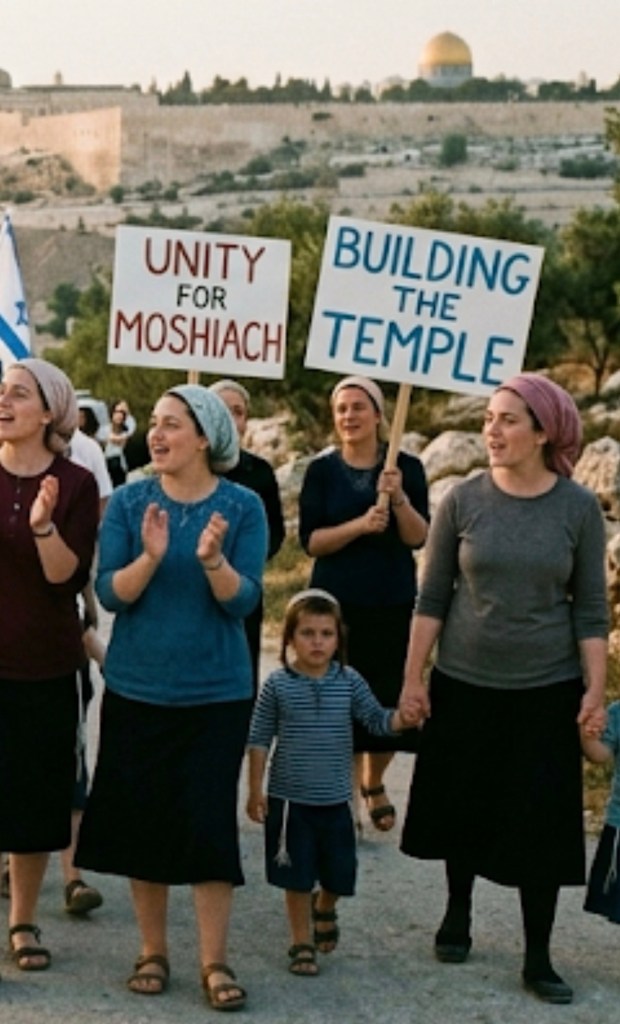
Modern Zionism emerged as a secular political movement in late nineteenth-century Europe, but its relationship to Jewish law and theology has never been merely political and its results have been to advance our faith. In my view, Zionism should be understood as a historical stepping stone toward the coming of the Moshiach, a stage in which the Jewish people recover the political, territorial, and institutional conditions necessary for the eventual fulfillment of Torah’s religious promises. From this perspective, Jewish sovereignty in the Land of Israel is not a contradiction of halacha but one possible expression of it, especially as articulated by Religious Zionist thinkers who read national restoration as part of a providential process (1).
The Land of Israel in Halachic Tradition
A foundational text for this argument is Nachmanides (Ramban), who in his glosses to Maimonides’ Sefer HaMitzvot lists the settlement of the Land of Israel as a positive commandment (2). Ramban’s formulation is significant because it frames Jewish residence in the land not only as a historical aspiration but as a binding religious duty. Maimonides (Rambam), by contrast, does not enumerate settlement of the land as a separate mitzvah, and later authorities have debated whether that omission reflects exclusion, a different legal classification, or a broader methodological difference (3).
For me, Ramban’s position remains the stronger and more persuasive classical anchor for Zionism. Even if one does not treat his wording as a direct blueprint for the modern state, his insistence that Jews are religiously bound to inhabit and reclaim the land makes it very difficult to treat Jewish national return as theologically trivial (2).
The Three Oaths
A second major source is the passage in Ketubot 111a known as the “Three Oaths” (4). The Talmud states that Israel should not ascend “as a wall,” should not rebel against the nations, and that the nations should not oppress Israel excessively (4). Anti-Zionist authorities, most notably Joel Teitelbaum in Vayoel Moshe, read this passage as a binding prohibition on organized Jewish sovereignty before the arrival of the Messiah (5). Religious Zionist interpreters, by contrast, have argued that the passage is non-binding, historically conditioned, or superseded by later developments (6).
I find the Religious Zionist reading more convincing. The history of Jewish persecution, culminating in the Holocaust, makes it difficult to sustain the idea that exile remained a stable or morally enforceable arrangement (6). In addition, the modern Jewish return to sovereignty received major international recognition through the San Remo Conference, the League of Nations Mandate for Palestine, and United Nations General Assembly Resolution 181 (7). These developments do not by themselves resolve halachic questions, but they do weaken the claim that Zionism was simply a rebellion against the nations (7).
Rav Kook and Redemptive Nationalism
Rabbi Abraham Isaac Kook gave the most important theological account of this process. In Orot and related writings, Rav Kook argued that the return to the land, even when carried out by secular pioneers, could be part of a divine process of national revival (8). He saw labor, agriculture, defense, and social reconstruction as preparatory stages for deeper spiritual renewal (8). This is the key to his importance: he made it possible to see secular Zionism not as a rejection of Judaism but as an instrument within providence.
I consider Rav Kook’s framework the most compelling modern religious interpretation of Zionism. It preserves the seriousness of Torah while refusing to reduce redemption to passive expectation. Zionism, on this reading, is not itself the final redemption, but it is a necessary stage in the historical movement toward it (8).
Haredi Opposition
Orthodox opposition to Zionism should be distinguished carefully. Mainstream Haredi movements such as Agudath Israel historically rejected Zionism as a religious ideology, yet often engaged the State of Israel pragmatically once it existed (9). Their objection was usually not that Jews should never live in the land, but that secular nationalism should not be endowed with religious significance (9). Anti-Zionist groups such as Satmar advanced a stronger claim: that the founding of the state before messianic redemption violated the Three Oaths and represented a theological error rather than a religious advance (5).
This distinction matters because it shows that Orthodox disagreement over Zionism is not merely political. It concerns the theological meaning of history, the status of Jewish sovereignty, and the relationship between human initiative and divine redemption (5)(9).
Conclusion
The strongest reading of the tradition, in my judgment, is that Zionism is a legitimate and even necessary stage in the long process leading toward the Moshiach. The state is not redemption itself, and it should not be confused with the final realization of Torah. But it can be understood as a providential beginning, a historical framework in which Jewish life, law, and sovereignty can once again develop on their own land (2)(4)(8).
That is why I see Zionism not as a replacement for Judaism, but as one of the historical forms through which the Jewish people prepare for the religious future promised by Torah and prophecy.
Endnotes
(1) For broad discussions of Religious Zionist political theology, see Aviezer Ravitzky, Messianism, Zionism, and Jewish Religious Radicalism (Chicago: University of Chicago Press, 1996); David Shatz, “Religious Zionism and the Modern State,” in The Cambridge Companion to Modern Jewish Philosophy, ed. Michael L. Morgan and Peter Eli Gordon (Cambridge: Cambridge University Press, 2007).
(2) Moses ben Nachman (Ramban), glosses to Maimonides’ Sefer HaMitzvot, Positive Commandment 4; see also the Sefaria text: Hasagot HaRamban on Sefer HaMitzvot, Positive Commandments Omitted by Rambam 4:1.
(3) Maimonides (Rambam), Sefer HaMitzvot; for discussion of the methodological dispute, see Isadore Twersky, Introduction to the Code of Maimonides (New Haven: Yale University Press, 1980).
(4) Babylonian Talmud, Ketubot 111a; see also Steinsaltz Center’s explanatory edition on the passage.
(5) Joel Teitelbaum, Vayoel Moshe (Brooklyn: n.p., 1961).
(6) For Religious Zionist treatments of the Three Oaths, see Rav Avraham Rivlin, “The Three Oaths (Shalosh Shavuot),” Kollel Yavneh; and Aviezer Ravitzky, Messianism, Zionism, and Jewish Religious Radicalism.
(7) San Remo Conference, April 19–26, 1920; League of Nations Mandate for Palestine, July 24, 1922 (effective September 29, 1923); United Nations General Assembly Resolution 181, November 29, 1947.
(8) Abraham Isaac Kook, Orot and related writings; see also Hanan A. Alexander, “Rav Kook and Religious Zionism,” and Eliyahu Stern, The Genius: Elijah of Vilna and the Making of Modern Judaism (New Haven: Yale University Press, 2020).
(9) On Agudath Israel and Haredi political theology, see Benjamin Brown, The Haredi Society: Sources, Trends, and Processes (Jerusalem: Van Leer Institute, 2017).
Written with the help of AI. AI image.
 Writing by Dr. Dannielle Blumenthal
You must be logged in to post a comment.