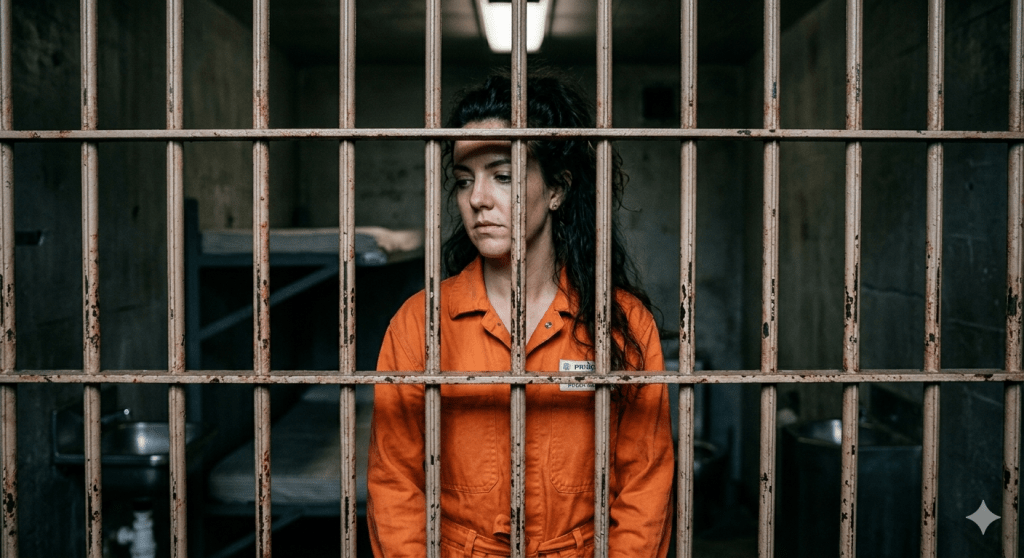
When social media-driven public advocacy crosses into targeted campaigns against individuals, it raises profound legal questions about free speech versus civil and criminal liability.
“FlatbushGirl,” Adina Miles Sash, is a digital influencer with a substantial Instagram following of approximately 100,000 individuals.
While it is unknown how many live in her home state of New York and how many outside it, certainly some cross state lies.
Based on court-validated documents and common legal representation of FG case studies, it’s looking like she may be responsible for a number of crimes and civil offenses.
I am not a lawyer and this is an investigative analysis, not professional opinion or guidance.
The concern is that FG may have conspired with an impaired woman’s mother in a mutually beneficial plot to label Raphi Stein a “Gett Abuser.” A Gett Abuser in Jewish parlance is a man who abusively withholds a Jewish divorce.
For the mother, the prize would be full custody of the grandchildren.
For FG, the prize would be an enhanced business and brand, and furtherance of an anti-religious agenda masked as a religious one.
The influencer in this case positions herself as an advocate. But the person for whom she is advocating reportedly never wanted her help and is embarrassed by it.
The influencer has, over a lengthy period of time, harassed not only the defamation victim but also anyone who comments on his behalf, disagrees with her tactics, or even researches the case. Ironically for a Jewish person, she uses the tactics of Hamas.
The influencer has also reportedly:
- Issued a death threat against the victim
- Caused his termination from employment, damaging his secular divorce case
- Attempted to have him evicted
- Mobilized an enormous an online audience across state lines to harass both victim and “enablers.”
The penalties for this behavior are potentially quite severe.
Here is an analysis of how the legal system handles these theoretical offenses under both state and federal frameworks, including the legal implications if an online follower acts on such rhetoric.
Part 1: Criminal Liability
Criminal charges are brought by state or federal prosecutors on behalf of the public and carry penalties that include probation, fines, and imprisonment.
In this scenario, the alleged actions cross into multiple jurisdictions.
First, the allegation of mobilizing an audience across state lines heavily triggers federal jurisdiction under Federal Cyberstalking (18 U.S.C. § 2261A).
If an influencer uses electronic communications to orchestrate a campaign with the intent to harass or place an individual in reasonable fear of death or serious bodily injury, it constitutes a federal felony.
This charge carries a statutory maximum penalty of up to 5 years in federal prison, which can escalate significantly based on the level of emotional distress or harm caused to the victim.
On the state level, the transmission of an explicit threat to a person’s life completely bypasses First Amendment protections.
In New York, this behavior is prosecuted as Aggravated Harassment in the Second Degree (NY Penal Law § 240.30), a Class A misdemeanor punishable by up to 1 year in jail and criminal fines.
If the threat creates an immediate, credible fear of physical injury, additional state-level charges for Menacing or Stalking would apply.
Furthermore, the alleged effort to force the husband out of his employment and home through coordinated digital intimidation could be prosecuted as Coercion under New York Penal Law § 135.60.
A person is guilty of Coercion when they compel someone to engage in or abstain from an action by instilling fear of economic ruin, property damage, or public humiliation via social media influence.
Depending on the exact execution and severity of the pressure, Coercion can range from a misdemeanor to a Class D felony, carrying a penalty of up to 7 years in state prison.
Part 2: Civil Liability
In a civil lawsuit, the plaintiff seeks financial restitution directly from the defendants to compensate for economic, professional, and emotional damages.
A primary claim in this hypothetical context would be Defamation Per Se.
Falsely labeling an individual a “Gett abuser” directly attacks their moral integrity.
Because the accusation is alleged to have directly injured the husband in his trade or profession—resulting in his termination—New York law presumes that damage occurred without requiring the plaintiff to prove a specific dollar amount of reputational harm.
A successful defamation suit can result in substantial compensatory damages for lost wages and benefits, alongside punitive damages intended to punish malicious behavior.
Closely tied to the job loss and attempted eviction is the tort of Tortious Interference with Contractual Relations. By intentionally contacting, exposing, or pressuring the husband’s employer and landlord with explosive accusations to force his firing and displacement, the influencer interferes with valid legal contracts.
If proven, the influencer could be held liable for all lost future earnings, moving expenses, and legal costs incurred due to the sudden destabilization.
Then there is the coordinated use of a 100,000-follower platform to systematically isolate and harass an individual.
This could also ground a lawsuit for Intentional Infliction of Emotional Distress (IIED).
If the court finds that the influencer’s weaponizing a massive online mob meets the required threshold, the target can be awarded significant financial compensation for documented psychological trauma and medical care.
Finally, if it is proven that the influencer and the mother-in-law explicitly planned, agreed, and acted in concert to execute these torts to achieve child alienation and brand growth respectively, they face liability for Civil Conspiracy.
This establishes joint and several liability, meaning both parties are equally responsible for paying the full amount of any financial judgments awarded by the court.
Part 3: Legal Consequences If a Follower Commits Violence
One of the most complex areas of modern digital law involves situations where an influencer rouses an audience, and an unidentifiable member of that crowd executes an act of physical violence against the target.
If a follower actually commits an assault or act of violence based on the influencer’s posts, both individuals face distinct legal realities.
Penalties for the Acting Follower
The follower who commits the physical act is entirely responsible for their own conduct.
Law enforcement would arrest and prosecute this individual for state or federal crimes such as Assault, Battery, Burglary, or Attempted Murder, God forbid.
Depending on the severity of the injuries inflicted and whether weapons were used, the follower faces mandatory, multi-year sentences in state or federal prison.
Criminal and Civil Penalties for the Influencer
Criminally, prosecuting the influencer for a follower’s independent violence requires meeting the strict Supreme Court standard set in Brandenburg v. Ohio. (Prosecutors must prove the influencer’s speech was directed to inciting imminent lawless action and was likely to produce such action.)
It should be noted that simply stating an intention to do something in a “legally compliant way” in a private text or a social media post does not act as a legal shield or automatically absolve someone if their actual subsequent actions constitute harassment.
If the influencer explicitly or implicitly directed a specific follower to commit a crime, they could be charged as a co-conspirator, solicitor, or accomplice, exposing them to the same criminal prison sentences as the perpetrator.
Civily, however, the influencer faces massive exposure under theories of Negligent Incitement or Civil Conspiracy to Commit Assault.
If a plaintiff can prove that an influencer reasonably should have foreseen that directing an emotionally charged mob of 100,000 people would result in harm to them, the influencer can be held completely liable in a civil court.
Under civil incitement, the influencer could be forced to personally pay for the victim’s medical bills, lifelong rehabilitation, lost earning capacity, and immense pain and suffering resulting from the attack.
In short, influencers face criminal and civil liability for their actions.
Disclaimer: As mentioned above, this legal analysis above is a hypothetical exploration of statutory law based entirely on the specific facts and allegations presented in the user’s prompt. It does not constitute legal advice, nor does it establish or assume the factual guilt or liability of any real-world individuals named.
 Writing by Dr. Dannielle Blumenthal
You must be logged in to post a comment.