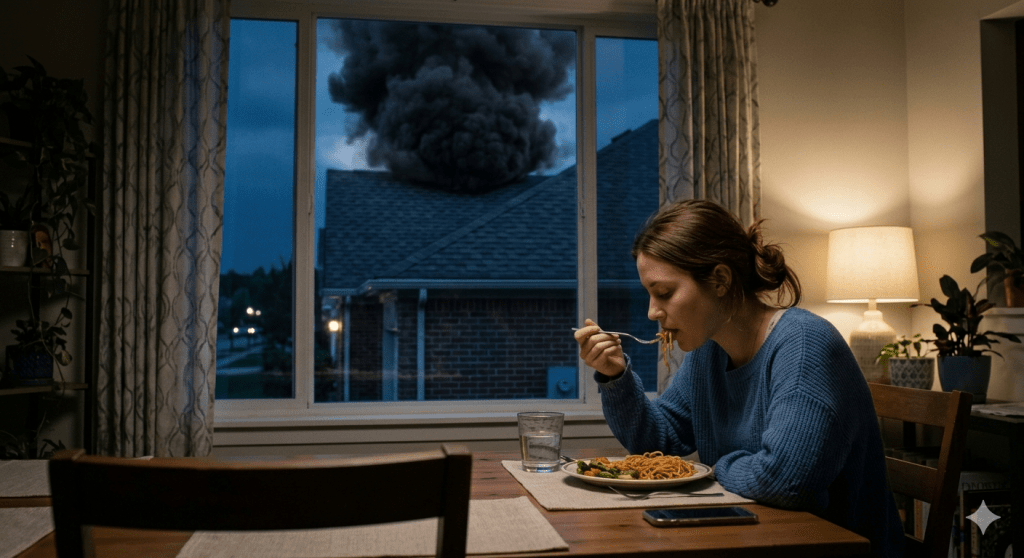
While J.D. Vance arrogantly lectures Israelis about diplomacy, a black cloud has formed over the heads of all Americans.
For decades, the Iranian regime and its primary proxy, Hezbollah, have invested in what security experts call a “homeland option”—a global network of sleeper cells embedded within Western societies, waiting for the signal to act.
This is not a new development. Intelligence reports indicate that these cells have been present in the United States and Canada since at least the 1980s. However, the nature of the threat has evolved from simple fundraising and logistics into a sophisticated apparatus capable of carrying out assassinations, sabotage, and high-impact terror attacks.
A Decades-Long Investment
The history of Iranian sleeper activity is a masterclass in patience and tradecraft. Unlike other extremist groups that often rely on visible radicalization, Iranian-backed operatives are trained to lead seemingly normal lives. They work regular jobs, own homes, and raise families, all while maintaining a “cloak of invisibility.”
At the heart of this network is Unit 910, Hezbollah’s elite External Security Organization. This unit is responsible for planning and executing clandestine operations outside of Lebanon. Their recruitment strategy is precise: they prioritize dual nationals with Western passports. These individuals can travel freely, use legitimate identification, and blend into diaspora communities without drawing the suspicion of local law enforcement.
The “Homeland Option” Strategy
For years, the U.S. intelligence community assessed that Iran was unlikely to strike within the American homeland for fear of massive retaliation. That calculus changed in 2011 with the discovery of a plot to assassinate the Saudi Arabian ambassador at a popular restaurant in Washington, D.C. This event signaled a shift in Tehran’s strategy, showing a new willingness to conduct lethal operations on U.S. soil in response to perceived threats to the regime.
Since then, the pace of activity has only accelerated. In recent years, several high-profile arrests have pulled back the curtain on these operations. Operatives like Ali Kourani and Alexei Saab were discovered to have spent years conducting pre-operational surveillance on “soft” and “hard” targets in New York City, including JFK Airport, the United Nations headquarters, and the Empire State Building. Their goal was to identify structural weaknesses in buildings and security gaps in transportation hubs to maximize the damage of a future attack.
The “Outsourced” Threat
One of the most concerning aspects of modern Iranian tradecraft is the use of criminal surrogates. To maintain a degree of separation and plausible deniability, Iranian intelligence services have increasingly outsourced their “dirty work” to transnational organized crime groups.
In various foiled plots, Iran has reached out to Mexican drug cartels, Eastern European gangs, and even biker groups like the Hells Angels to facilitate assassinations and kidnappings. This hybrid model—where the regime provides the funding and the target package while criminals provide the muscle—makes these cells significantly harder for traditional counterterrorism units to track.
The Activation Signal
The threat is no longer a distant hypothetical. Following recent military escalations, such as the strikes on Iranian nuclear sites and the death of senior regime leaders, federal authorities have issued urgent warnings. Law enforcement recently intercepted encrypted communications relayed across multiple countries, which analysts believe could be a signal to “wake up” prepositioned assets.
These transmissions suggest that the regime may be moving from the surveillance phase to the operational phase. Unlike the complex, large-scale planning of 9/11, experts believe these sleeper cells are more likely to execute “lone wolf” style attacks or strikes against critical infrastructure, such as power grids and water systems, which could cause widespread disruption and psychological shock.
A Global Reach
The threat extends far beyond the United States.
- Canada has been identified as a major hub for Iranian activity, with reports suggesting hundreds of individuals linked to the regime may be residing there.
- In Latin America, countries like Venezuela serve as launchpads for regional subversion and intelligence gathering.
- Across Europe, from Germany to Sweden, authorities continue to disrupt plots targeting Jewish institutions and political dissidents.
The Need for Vigilance
Iranian sleeper cells are the ultimate long-term tool of asymmetric warfare. They exploit the openness of Western societies, utilizing religious centers, cultural foundations, and legitimate businesses as cover for their operations.
As geopolitical tensions continue to rise, the activation of these dormant networks remains a credible and near-term risk. The shadow war is no longer confined to the shadows of the Middle East—it is a persistent reality in the neighborhoods and cities of the West.
Responsibility for defense now rests not just on the military, but on the continued vigilance of local law enforcement and the communities they protect.
(AI image)
 Writing by Dr. Dannielle Blumenthal
You must be logged in to post a comment.