Geopolitics has always been a game of short memories, but the latest developments surrounding the U.S. and Turkey are pushing the boundaries of strategic whiplash.
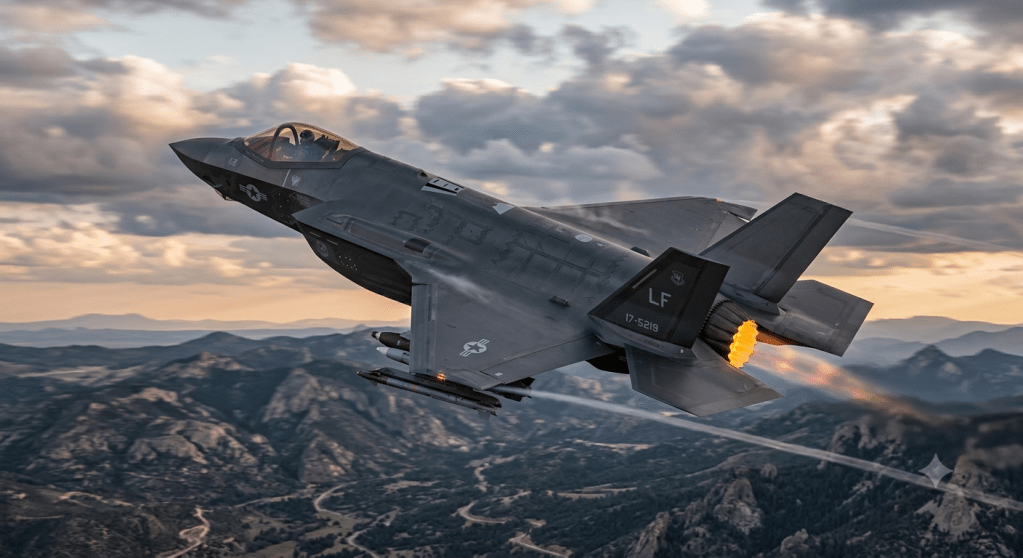
Just a few years ago, Turkey was unceremoniously kicked out of the F-35 Joint Strike Fighter program. The reason? Turkish President Recep Tayyip Erdoğan bought an S-400 air defense system from Russia—a massive security risk, considering operating a Russian radar system right next to America’s top-tier stealth fighter is an intelligence goldmine for Moscow.
Fast forward to today, and President Donald Trump is actively signaling a massive U-turn, exploring pathways to readmit Turkey into the F-35 program. But critics are pointing to a messy mix of financial leverage, lobbying, and Ankara’s ties to designated terrorist groups as reasons why this deal is a dangerous mistake.
The Money Trial: Settlements and Financial Leverage
At the heart of the sudden diplomatic thaw is a concerted effort by Turkey to clear its financial and legal hurdles in Washington.
During bilateral meetings, Erdoğan openly pushed for the resolution of a massive U.S. federal case against Turkish state lender Halkbank, which was accused by the Department of Justice of running a multi-billion dollar scheme to help Iran evade U.S. sanctions. Turkey has aggressively lobbied the administration, proposing a $100 million settlement to make the fraud and money-laundering charges disappear. Trump has reportedly given highly encouraging signals to Erdoğan on the matter, telling him the problem is “finished for us.”
Furthermore, Erdoğan has weaponized the $1.4 billion Turkey originally invested in the F-35 program before being evicted, framing the delivery of the jets as getting what they already paid for. By dangling financial settlements and leveraging past investments, Ankara has successfully caught the administration’s ear—bypassing traditional congressional oversight channels to push a $700 million initial defense package through the State Department.
The Terror Elephant in the Room
The financial wheeling and dealing is bad enough, but the geopolitical reality of who Turkey supports makes the F-35 push actively alarming to national security experts.
While Turkey is a NATO ally, Erdoğan’s foreign policy has routinely aligned with forces actively hostile to Western interests:
- Open Support for Hamas: Following the October 7 attacks, Erdoğan didn’t just fail to condemn Hamas—he explicitly backed them, hosting senior leaders in Istanbul and Ankara and calling them “liberators.”
- The Syrian Quagmire: Turkey’s military operations in northern Syria have frequently targeted Kurdish forces (who were vital U.S. allies in dismantling ISIS), effectively destabilizing the region and creating vacuums that extremist groups have repeatedly exploited.
Giving fifth-generation stealth fighters to a regime that openly harbors and champions a group responsible for killing American and Israeli citizens is a massive pill for lawmakers to swallow.
The Security Risk: A Gift to Russia and China
Beyond the ethical implications of rewarding a state with ties to terror networks, the hardware risks are staggering.
“Turkey’s possession of both the S-400 and the F-35 is so dangerous because the two systems operating in proximity… could give Moscow valuable intelligence for shooting down F-35s flown by Americans and our allies.”
— Foundation for Defense of Democracies (FDD)
If Turkey gets the F-35 while still keeping its Russian S-400 missiles, U.S. military technology is compromised. Analysts also point out Turkey’s heavy integration of Chinese 5G infrastructure, creating a multi-front cyber and espionage vulnerability. If Moscow or Beijing maps the F-35’s stealth profile via Turkey, the multi-trillion-dollar aircraft program loses its operational edge globally.
Bipartisan Backlash
Unsurprisingly, Congress isn’t taking this lying down. A bipartisan group of lawmakers—including high-ranking Democrats and prominent Greek-American Republicans—have voiced furious opposition. They argue that bypassing Congress to push defense articles to Ankara violates the Countering America’s Adversaries Through Sanctions Act (CAATSA).
Key regional allies like Israel, Greece, and Cyprus are watching with growing anxiety. For Israel, Turkey’s acquisition of the F-35 directly threatens its qualitative military edge in the Middle East, especially given Erdoğan’s escalating, aggressive rhetoric against the Jewish state.
The Bottom Line
A nation’s foreign policy shouldn’t be dictated by personal rapport between leaders or backroom financial settlements. Readmitting Turkey to the F-35 program while it still holds Russian hardware and maintains ties to terrorist entities isn’t just bad diplomacy—it’s a direct threat to American servicemen and global stability.
Congress must hold the line, enforce CAATSA, and remind the administration that cutting-edge American tech is a privilege earned through shared values and security cooperation, not a commodity to be bartered away.
 Writing by Dr. Dannielle Blumenthal
You must be logged in to post a comment.