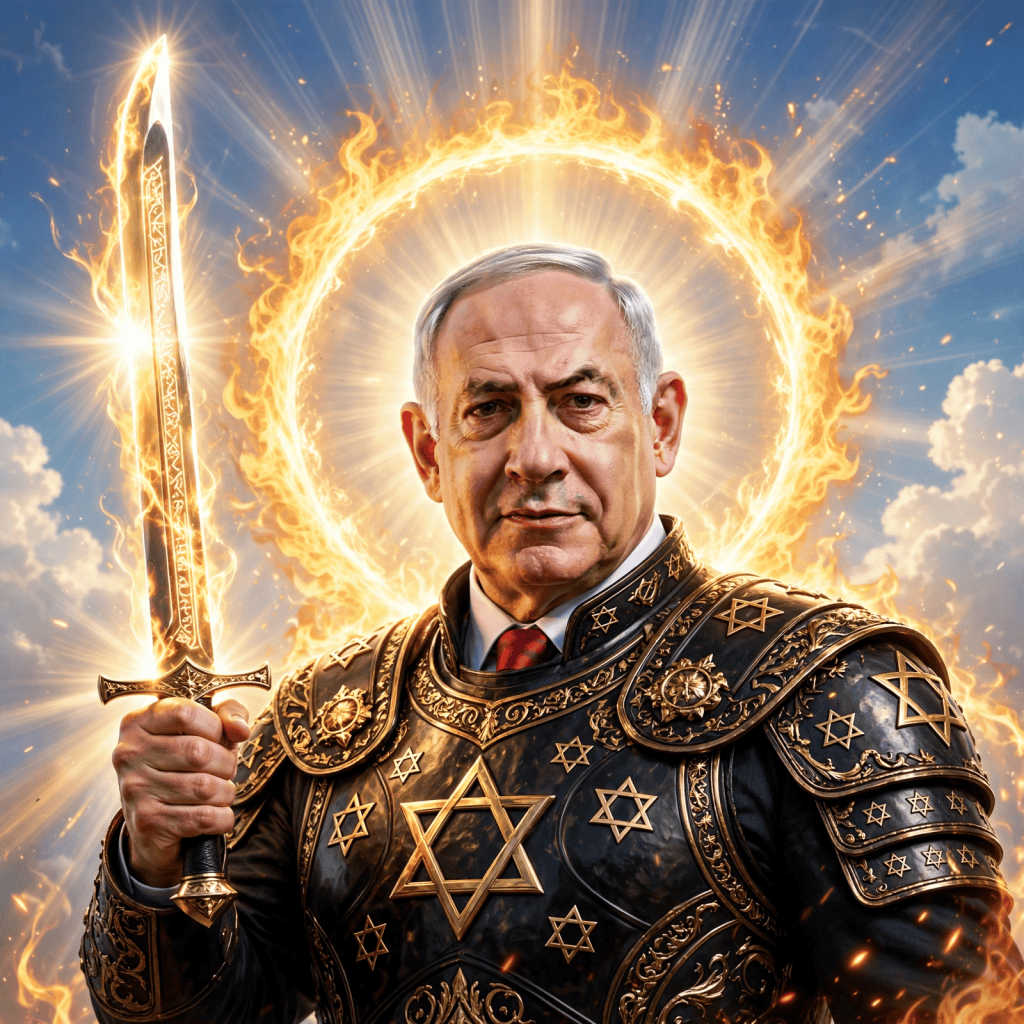
In September 2026, Haaretz published an explosive allegation: United Arab Emirates President Sheikh Mohammed bin Zayed Al Nahyan had personally warned Benjamin Netanyahu before October 7, 2023, that Hamas was preparing a major attack, and Netanyahu had failed to pass the warning to Israel’s security leadership.
Netanyahu categorically denied the report, including the claim that the alleged conversation had taken place. He announced that he would sue. Haaretz stood by its reporting. On September 29, Netanyahu moved beyond the threat and filed a defamation lawsuit seeking NIS 2.6 million against media outlets and journalists over reports that he had received advance warnings and withheld them from security officials.[1]
The stakes could hardly be higher. The allegation does not merely accuse Netanyahu of presiding over a failed security system. It places advance knowledge in his hands and turns a catastrophic institutional breakdown into an accusation of personal abandonment. His denial directly challenges that account. Neither the publication of the allegation nor the filing of the lawsuit establishes which account is true.
But the political effect is unmistakable: Netanyahu is again placed at the center of a narrative in which the failures of an entire national security apparatus become evidence against one man.
To observe the relentless campaign against Benjamin Netanyahu is to witness what this author regards as one of the most sophisticated political character assassinations in modern history. Far from a spontaneous outcry of moral outrage, the global villainization of Israel’s Prime Minister follows a pattern rooted in the foreign policy conflict of the Obama years: isolate Netanyahu, dismantle his political standing, and force a political outcome in Jerusalem that his opponents could not reliably secure at the ballot box.
The argument is not that every critic belongs to a single organization or receives the same instructions. It is that distinct institutions have repeatedly converged on the same target, reinforcing a narrative in which Netanyahu’s resistance becomes the offense and his removal becomes the remedy.
1. THE ROOTS OF THE CAMPAIGN: THE OBAMA DOCTRINE
The effort to unseat Netanyahu is not new. Its political foundations were visible more than a decade ago.
Ideological friction
The Obama administration’s pursuit of an agreement with Iran collided directly with Netanyahu’s understanding of Israel’s security. As this author wrote in 2019: “Obama and Netanyahu are at war from Day 1 specifically over Iran… Obama wants to push through a deal anyway, and Netanyahu is blocking him” (“Israel Is A True Friend,” May 29, 2019).
Netanyahu brought that conflict into the open when he addressed a joint meeting of Congress on March 3, 2015. He challenged the nuclear agreement then under negotiation and warned that it would not eliminate the Iranian threat. Obama dismissed the speech as offering “nothing new.” He also declined to meet Netanyahu during the visit, defending that decision beforehand on the stated ground that Israel’s election was approaching.[2]
As the author later wrote: “He came here in 2015. He spoke to Congress; Obama didn’t want him to do that” (“Israel War Diary 3,” October 21, 2023).
Netanyahu was not merely disagreeing over diplomatic language. He was challenging a defining foreign policy project of an American president. That confrontation made him an obstacle to an agenda whose supporters regarded accommodation with Iran as a strategic achievement.
Political targeting
The conflict did not remain confined to speeches and diplomatic rebukes.
During the 2015 Israeli election campaign, infrastructure developed through State Department-funded grants to OneVoice was subsequently used to support Victory 15, an organization campaigning against Netanyahu. A bipartisan Senate investigation documented that sequence and criticized the State Department’s failure to guard against the later political use of grant-supported resources.[3]
The author’s September 2025 account summarized the controversy:
“In 2013–2014, under President Obama, the US State Department awarded $350,000 in grants to OneVoice Israel… Critics alleged this infrastructure was repurposed for Victory 15 (V15), an anti-Netanyahu group… that urged voters to support ‘anyone but Bibi’” (“The USA Often Ties Israel’s Hands Behind Its Back,” September 20, 2025).
The Senate report’s limiting finding must also be stated: it found no evidence that OneVoice spent grant funds themselves to influence the election. The issue was the subsequent political use of infrastructure developed with American support.[3]
That distinction matters, but it does not make the controversy disappear. An initiative supported by American public money helped develop resources that later served a campaign against Israel’s elected Prime Minister.
The anti-Netanyahu effort failed to defeat him. Nevertheless, it demonstrated a mechanism through which ostensibly non-electoral institutional activity could become electoral leverage against him.
2. OCTOBER 7 AND THE INSTITUTIONAL TRAP
October 7 was first and foremost a Hamas atrocity. It was also a catastrophic failure of the institutions charged with detecting, deterring, and defeating such an attack.
Beginning that October, the author published a series examining the anomalies and unanswered questions as they emerged:
“It took six hours for any reaction to occur, when the army and air force bases were within earshot of what was going on” (“Confronting the Harsh Logic that America Issued the Stand Down Order to Israel On October 7,” November 8, 2023).
“Hundreds of terrorists were able to cross the border by surprise… with little to no military response for many hours, in a country blanketed by cameras, with supposedly some of the best intelligence in the world” (“Rabbi Chananya Weissman’s Extensive Dossier On The Suspected Treason In Israel,” October 18, 2023).
Other archive posts raised allegations concerning helicopter deployment, the availability of weapons in border communities, and ignored warnings from surveillance observers. These accounts demanded investigation. They did not, merely by being published, establish sabotage, treason, or an American stand-down order.
What the military’s subsequent investigation did establish was devastating enough. The IDF had drastically underestimated Hamas and failed in its mission to protect Israeli civilians. Assumptions about Hamas’s intentions, reliance on intelligence and defensive barriers, and failures to recognize an urgent threat contributed to the collapse.[4]
This was not a failure confined to one politician’s office. It was a failure of intelligence assessment, military preparation, command judgment, and operational response.
Yet the political struggle quickly became a struggle over whether Netanyahu would absorb responsibility for the entire catastrophe.
The inversion of responsibility
On October 29, 2023, Netanyahu publicly stated that he had not been warned of Hamas’s war intentions and that military and Shin Bet leaders had assessed Hamas as deterred. The backlash was immediate. He deleted the statement and apologized.[5]
His critics saw blame-shifting. His defenders saw something else: a Prime Minister being attacked for identifying the assessments on which his government had relied.
The author had already raised the broader concern in her October 18 essay, “Israel’s 1-6 (10-6) Just Like America’s 1-6 – Was Netanyahu Set Up Just Like Trump?” The later confrontation sharpened that concern. The institutions responsible for supplying warning and preparing a response had failed, but Netanyahu’s attempt to discuss their role became a political offense of its own.
The question was no longer simply what had gone wrong. It was who would be permitted to describe what had gone wrong—and whether Netanyahu could do so without being accused of violating national unity.
Legal restrictions and command authority
The struggle continued when Netanyahu sought to replace Shin Bet chief Ronen Bar.
In May 2025, the High Court ruled that the dismissal process had been unlawful. The reported grounds included deficiencies in the factual basis and hearing process, as well as Netanyahu’s conflict of interest arising from investigations involving his aides. Attorney General Gali Baharav-Miara also restricted Netanyahu’s involvement in appointing a successor pending legal guidelines.[6]
Those were the institutions’ stated legal grounds. But the political consequence was equally important: the elected government’s effort to replace the head of a security service that had failed on October 7 became subject to judicial and legal intervention.
For Netanyahu’s defenders, this was the institutional trap in its clearest form. He was expected to answer for the security failure, yet his authority to change the leadership of the failed apparatus was constrained.
Caroline Glick had advanced that interpretation months earlier. In her December 2024 column, “A coup attempt in the shadow of Oct. 7,” she argued that senior security officials were deflecting responsibility onto Netanyahu and that figures in the security and legal establishments were seeking to oust him.[7]
In May 2026, the author reported a further allegation attributed to Glick: that Baharav-Miara had told Netanyahu on October 7 that he lacked authority to change the rules of engagement or declare war, thereby obstructing an immediate response (“Shocking Claim by Caroline Glick: Israeli Attorney General Blocked Quick Air Force Response to October 7,” May 10, 2026; “If Netanyahu Wanted A Pretext for Genocide, Why Try To Block The Invasion Immediately?,” May 11, 2026).
That specific allegation remains uncorroborated by the outside sources cited here and must be treated as an allegation, not an established operational finding.[8]
The larger argument does not require pretending that every unresolved claim has been proved. The documented institutional failure and the subsequent struggle over Netanyahu’s authority are sufficient to demand scrutiny.
In the author’s analysis, the political objective was to bind Netanyahu to the catastrophe while limiting his ability to challenge the institutions implicated in it.
3. WAR CRIMINAL ALLEGATIONS AND INTERNATIONAL LAWFARE
As Israel responded to the Hamas attack, the confrontation expanded beyond domestic politics. Netanyahu became the target of international criminal proceedings and political demands for his arrest.
The ICC arrest warrants
On November 21, 2024, the International Criminal Court’s Pre-Trial Chamber I issued arrest warrants for Netanyahu and former Defense Minister Yoav Gallant, alleging war crimes and crimes against humanity.[9]
The legal distinction is essential: arrest warrants are not convictions. The chamber applied a standard of reasonable grounds to believe. Nevertheless, the political impact of an arrest warrant against a sitting Prime Minister is immediate and profound.
Days later, the author noted that even Iran’s Supreme Leader was invoking “the corrupt ICC’s arrest warrant” (“Boomerang Iran,” November 25, 2024).
In the author’s view, the proceedings transformed international criminal procedure into another instrument of pressure against Israel’s leadership, while failing to account adequately for the asymmetrical and urban character of the war against Hamas.
Israel challenged the Court’s jurisdiction and the procedural basis for its investigation. The Court asserted territorial jurisdiction through Palestine and rejected those challenges at that stage.[10]
That dispute cannot honestly be reduced to a slogan. Israel’s objections were legal objections, not merely expressions of displeasure. Conversely, the Court’s decision to proceed did not itself establish that Netanyahu was guilty.
Yet political rhetoric routinely collapses those distinctions. An allegation becomes a verdict. An arrest warrant becomes proof. Opposition to the proceedings becomes evidence that the accused is evading justice rather than contesting authority.
That is where a legal proceeding acquires the political utility of lawfare.
The rhetorical offensive
Zohran Mamdani carried the controversy into New York City politics, advocating Netanyahu’s arrest and exploring whether his administration could carry it out.
The author’s 2025–2026 coverage examined Mamdani’s descriptions of Israel’s war as “genocide” and his arrest proposal (“Zohran Mamdani: Exact Citations for Antisemitic Statements, With Context,” June 28, 2025; “Mamdani’s Illegal Obsession,” July 21, 2026).
The latter stated:
“It is illegal—and impractical—for NYC Mayor Zohran Mamdani to pursue the arrest of Israeli Prime Minister Benjamin Netanyahu. As a sitting head of government, Netanyahu is protected by diplomatic immunity.”
The legal barriers were broader than that shorthand suggests. They included head-of-government immunity, protections associated with United Nations visits, federal law, and limits on municipal enforcement authority.[11]
By July 21, 2026, Mamdani acknowledged that New York City lacked independent legal authority to execute the warrant. He instead advocated federal action.[11]
That acknowledgment exposed the gap between a politically powerful promise and the authority required to fulfill it. The promise could still serve its rhetorical purpose even when the city could not lawfully deliver the arrest.
The October 7 anniversary statement
Mamdani’s October 7, 2026 statement brought that rhetorical campaign into the anniversary of the massacre itself.
Writing from the official mayoral account, he began by acknowledging the “horrific war crimes of October 7,” stating that Hamas had killed more than 1,100 Israelis and abducted 251 others. But he then pivoted from mourning the victims of Hamas to accusing Israel:
“The suffering did not begin nor end that day. It instead continued through the Israeli government’s devastating, ongoing genocide in Gaza.”[12]
The statement attributed more than 74,000 Palestinian deaths, including more than 21,000 children, to Israel. It described a “so-called ceasefire,” accused Israel of bombing ambulances, targeting residential buildings and journalists, and turning away food aid, and declared that American tax dollars funded “these war crimes.” It concluded by condemning “occupation and apartheid” and accusing the federal government of complicity through arms shipments.[12]
The structure matters. Hamas’s massacre receives an opening acknowledgment; the remainder of the statement turns the anniversary into an indictment of Israel and the United States. The word “genocide” is presented not as an allegation requiring proof, but as an established description. The ceasefire is dismissed as “so-called.” American support for Israel becomes “complicity.”
In the author’s judgment, this was a calculated rhetorical pivot: use the commemoration of Hamas’s atrocities as the platform for prosecuting Israel in the court of public opinion.
The statement did not name Netanyahu. Its function within the broader narrative was nevertheless clear: condemn the government he leads, present its alleged criminality as settled, and turn an anniversary of murdered and abducted Israelis into another occasion for mobilizing opposition to Israel.
Mamdani’s words are documented. His casualty figures and descriptions of particular attacks remain claims made in that statement, not facts independently established by citing the statement itself. That distinction is precisely what his rhetoric obscures: the political accusation is delivered with the certainty of a verdict.
4. A SINGLE NARRATIVE INFRASTRUCTURE
Taken together, these episodes reveal a recurring political logic.
Netanyahu challenges an American diplomatic project, and infrastructure developed with American support later serves a campaign against him.
Israel’s security institutions fail catastrophically, and the ensuing struggle centers on his responsibility while his attempts to replace security leadership encounter legal restrictions.
An international court issues warrants, and political figures abroad convert those warrants into demands for arrest before any conviction.
A mayor commemorates October 7, then uses the occasion to declare Israel guilty of genocide and its American supporters complicit.
These are not identical events. Their actors exercise different powers and offer different justifications. The cited sources document the episodes; they do not establish a common command structure linking them.
The author’s argument is that they nevertheless reinforce the same narrative: Netanyahu is the obstacle, Netanyahu is the culprit, and Netanyahu’s removal is the solution.
She has traced that pattern from her 2019 discussion of the Obama–Netanyahu confrontation, through her October 2023 demand that “we need to investigate… how Netanyahu was set up and how he is treated by the corrupt left wing, the same way that Trump is treated” (“Israel War Diary 3,” October 21, 2023), to her 2025 discussion of “The Deep State’s Manchurian Candidates: Mamdani, Omar, Zelenskyy” (June 28, 2025).
The latest Haaretz dispute belongs in that chronology precisely because its central allegation remains contested. It places a devastating accusation into public circulation, Netanyahu denies it, and the resulting litigation becomes another battlefield in the struggle over his legitimacy.
Mamdani’s anniversary statement illustrates a related mechanism: acknowledge the Israeli victims, then redirect the emotional and political force of the occasion toward an accusation against Israel. The transition is not incidental to the statement. It is the statement’s organizing move.
Scrutiny of Netanyahu is legitimate. Demanding accountability is legitimate. Neither principle entitles journalists, politicians, prosecutors, or institutions to treat disputed allegations as established facts—or to collapse an entire national catastrophe into the culpability of a single political adversary.
Netanyahu stands at the center of this storm, in the author’s judgment, not because the case against him has been conclusively proved, but because he has refused to yield to an establishment intent on forcing a political outcome his opponents have repeatedly struggled to secure through electoral politics.
FOOTNOTES & DISCLAIMERS
[1] Al-Monitor, “Netanyahu threatens to sue Haaretz for reporting UAE warned Israel of Oct. 7 attack,” September 9, 2026; Haaretz, “Netanyahu Says He Will Sue Haaretz Following Oct. 7 Exposé,” September 9, 2026; The Jerusalem Post, reporting on Netanyahu’s defamation lawsuit over alleged pre-October 7 warnings, September 29, 2026. These sources document the allegation, Netanyahu’s denial, and the subsequent lawsuit seeking NIS 2.6 million. The lawsuit concerns reporting about alleged Emirati and Egyptian warnings. The cited reporting does not conclusively resolve whether the alleged Emirati warning occurred.
[2] NPR, “Obama Defends Decision Not To Meet With Netanyahu During D.C. Visit,” February 9, 2015; BBC News, “Obama says Netanyahu’s Iran speech contains ‘nothing new,’” March 4, 2015. Obama’s February statement concerned Netanyahu’s forthcoming March visit. His stated reason for declining a meeting was the proximity of Israel’s election. These sources establish the diplomatic confrontation, not a documented policy of regime change.
[3] U.S. Senate Permanent Subcommittee on Investigations, Review of U.S. State Department Grants to OneVoice: Joint Staff Report, July 12, 2016; Politico, “Senate report: State Dept. grant also aided campaign to oust Netanyahu,” July 12, 2016. The investigation documented subsequent electoral use of grant-supported infrastructure and shortcomings in safeguards against that use. It expressly stated: “The Subcommittee found no evidence that OneVoice spent grant funds to influence the 2015 Israeli elections.” It did not establish that State Department officials awarded the grants for the purpose of defeating Netanyahu.
[4] Reuters, “Israeli military inquiry says it ‘failed to protect’ civilians on October 7,” February 27, 2025. The investigation documented underestimation of Hamas, mistaken assumptions about its intentions, and serious failures of preparedness and response. It does not corroborate deliberate sabotage, an American stand-down order, or a coordinated plan to remove Netanyahu.
[5] Reuters, “Netanyahu swipes at intel chiefs over Hamas, then apologizes,” October 29, 2023. This report documents Netanyahu’s statement concerning the assessments he received, the criticism it generated, and his subsequent retraction and apology. The author’s October 18 essay preceded this exchange and is cited for her earlier interpretation, not as contemporaneous documentation of the October 29 event.
[6] The Times of Israel, “High Court rules Shin Bet head’s dismissal ‘unlawful,’ PM had conflict of interest,” May 21, 2025; The Jerusalem Post, “Israelis react to High Court’s ruling on firing spy chief Ronen Bar,” May 21, 2025. The reported legal grounds included deficiencies in the factual basis and hearing process and a conflict of interest. The attorney general subsequently restricted Netanyahu’s involvement in selecting a successor pending legal guidelines. The High Court’s May judgment issued no operative order because Bar had already announced his departure. The political interpretation advanced in the essay is distinct from the institutions’ stated legal reasoning.
[7] Caroline B. Glick, “A coup attempt in the shadow of Oct. 7,” Jewish News Syndicate, December 6, 2024. Glick argued that senior security officials were deflecting responsibility onto Netanyahu and that figures in the security and legal establishments were seeking to oust him. This is an attributable opinion column, not an independent investigative finding establishing coordination.
[8] Dannielle Blumenthal, “Shocking Claim by Caroline Glick: Israeli Attorney General Blocked Quick Air Force Response to October 7,” May 10, 2026. Search located this archive entry, but its full text and underlying evidence were not retrieved. The specific allegation concerning rules of engagement and war-declaration authority remains uncorroborated by the outside sources checked. Glick’s December 2024 column does not establish this separate allegation. Other quotations from the author’s archive are reproduced as supplied and have not been independently checked against full texts.
[9] International Criminal Court, “Situation in the State of Palestine: ICC Pre-Trial Chamber I rejects the State of Israel’s challenges to jurisdiction and issues warrants of arrest for Benjamin Netanyahu and Yoav Gallant,” November 21, 2024. The public announcement identifies the chamber, individuals, date, and alleged offenses. The Court applied the arrest-warrant standard of reasonable grounds to believe; it did not issue convictions. The warrants themselves were classified as secret.
[10] International Criminal Court, “Situation in the State of Palestine: ICC Pre-Trial Chamber I rejects the State of Israel’s challenges to jurisdiction and issues warrants of arrest for Benjamin Netanyahu and Yoav Gallant,” November 21, 2024. The announcement identifies Israel’s September 26, 2024 challenge under Article 19 and its request concerning notification under Article 18. The Court asserted territorial jurisdiction through Palestine and rejected those challenges at that stage. Jurisdiction and complementarity are distinct legal questions. This source documents the submissions and the Court’s response without establishing that either side’s legal position is beyond dispute.
[11] Reuters, “Why New York’s Mamdani cannot have Israel’s Netanyahu arrested,” July 22, 2026; BBC News, “Mamdani backs off pledge to arrest Netanyahu citing lack of authority,” July 22, 2026. These reports document Mamdani’s acknowledgment that New York City lacked independent authority to execute the ICC warrant. Reuters discusses the relevant legal barriers, including head-of-government immunity, protections associated with United Nations visits, federal law, and municipal enforcement limits.
[12] Mayor Zohran Kwame Mamdani (@NYCMayor), statement marking the third anniversary of October 7, X, October 7, 2026, post 2107813239585120609. The retrieved post identifies the official mayoral account and the anniversary statement; the quotations and figures above reproduce the statement supplied for this essay. Citation of the statement establishes what Mamdani said, not independent verification of the casualty figures, allegations concerning particular attacks, or characterization of Israel’s conduct as genocide. The description of the statement as a calculated rhetorical pivot is the author’s interpretation of its wording and structure, not independently established evidence of Mamdani’s private intent.
Image by Meta AI.


You must be logged in to post a comment.