A recurring question in many Jewish and pro-Israel circles is not just what is being said—but why it works.
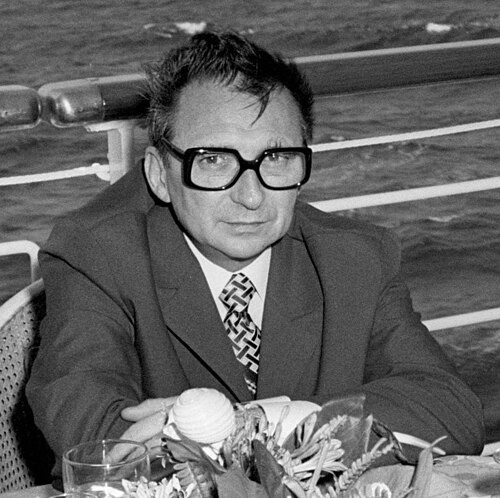
“Disinformation,” by Ion Mihai Pacepa (1928-2021) and Ronald J. Rychlak, offers a provocative answer—it is the downstream effect of statecraft.
Pacepa, a former top Soviet intelligence official, explains that disinformation is designed to:
• Shape moral perception, not just political opinion.
• Embed itself within trusted Western channels—media, academia, culture.
• Outlast fact-checking by anchoring itself in partial truths.
This helps explain a key dynamic: the most effective narratives are not obviously false. They are emotionally coherent, morally framed, and selectively accurate. Successful disinformation contains a “kernel of truth.”
• Real events are reframed within distorted moral narratives.
• Complex conflicts are reduced to asymmetrical good-versus-evil frames.
• Select facts are elevated while context disappears.
This structure makes rebuttal difficult. Challenging the narrative can feel, to an outside audience, like denying reality rather than correcting it.
Soviet intelligence actively worked to weaponize anti-Zionism during the Cold War.
• Anti-Zionism was deliberately reframed as a moral and anti-colonial cause.
• Antisemitic tropes were repackaged in political language for global audiences.
• These narratives were seeded in regions and movements where they could scale—particularly in the developing world.
From a communications and social psychology perspective, the book aligns with what we see today:
• Moral clarity beats complexity: Simple injustice narratives travel faster than nuanced geopolitical realities.
• Institutional amplification matters: Once narratives enter academia, NGOs, or media, they gain legitimacy.
• Repetition builds reality: Over time, claims shift from contested to “commonly known.”
This is not accidental. It reflects design.
The pattern is consistent:
• Identify a target with moral authority or strategic importance.
• Reframe that target using emotionally charged narratives.
• Use credible intermediaries to distribute the message.
• Allow time and repetition to do the rest.
Seen through this lens, the persistence of anti-Israel disinformation becomes less surprising—and more structural.
The key reframing this book offers is simple but consequential: If disinformation is treated as random or organic, responses will always lag. If it is understood as statecraft, then it demands strategic, not reactive, countermeasures.
That includes:
• Competing at the level of narrative, not just facts.
• Understanding audience psychology, not just evidence.
• Recognizing that influence often flows through indirect, credible channels.


You must be logged in to post a comment.