Early in the morning on Friday, July 24, a group of 60 Israelis, including families and minor children, set out for a 17-mile hike, from the settlement of Har Bracha to the settlement of Kedumim, in the greater area of Samaria, in what is known today as the West Bank.
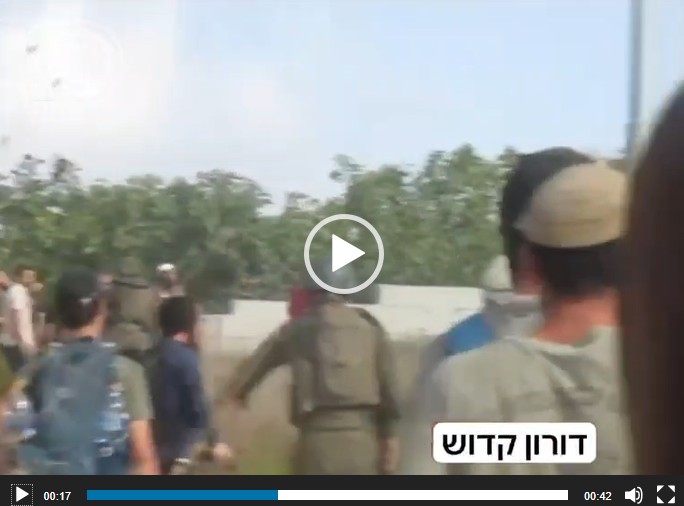
They were protected by armed guards.
Under the 1993 Oslo Accords, the West Bank was divided into three parts. Area A and Area B are under partial or full Palestinian Authority control. Area C is under Israeli control. Both the origin and the destination are in Area C.
However, when you’re actually walking on the path, you do pass near Palestinian towns and villages which lie within Area A and Area B. And that’s where the problem started.
At 7:05 AM, the group reached a natural spring near the Sela Ridge when they were set upon by Arab youth wielding stones and clubs. Afraid for their lives, they ran away immediately toward Havat Gilad, another Israeli settlement within the safe zone of Area C.
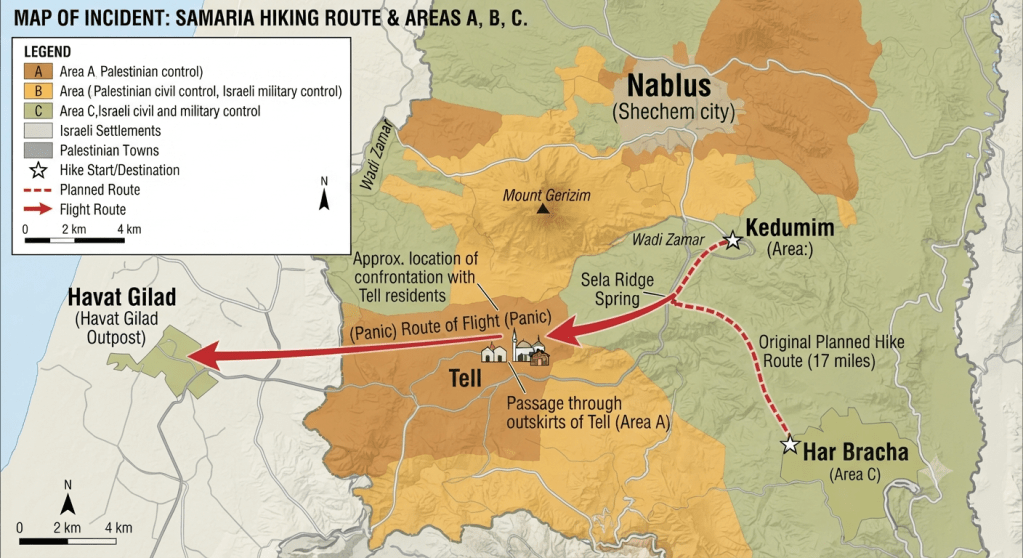
It was during this retreat that the group moved through the outskirts of Tel (known as Tell to Arabs), a village southwest of Shechem (known as Nablus to Arabs).
The hike was taking place with security coordination from the IDF. The problem was that the group’s entry into this particular town was “unauthorized and uncoordinated.” Of course, the only reason they were there was because the Palestinians attacked them.
Within Tel, the hikers’ trajectory brought them directly into contact with village residents near a mosque.
Now, there is no evidence that the second group was coordinating with the first group. And we know there is a history of back and forth confrontations with Israeli settlers.
Therefore, their logical conclusion could very well have been that the Israelis were there to harm them.
Indeed, Palestinian officials claim the group attempted to break into homes.
From the Israeli side, this is of course ludicrous. They know how murderous the Arabs feel towards them. There were children present. Obviously they were frantic to get back to safety.
By 8:05 a.m., the misunderstanding had turned close to deadly. Dozens of hostile village residents had converged on the group from three distinct directions. They were completely surrounded.

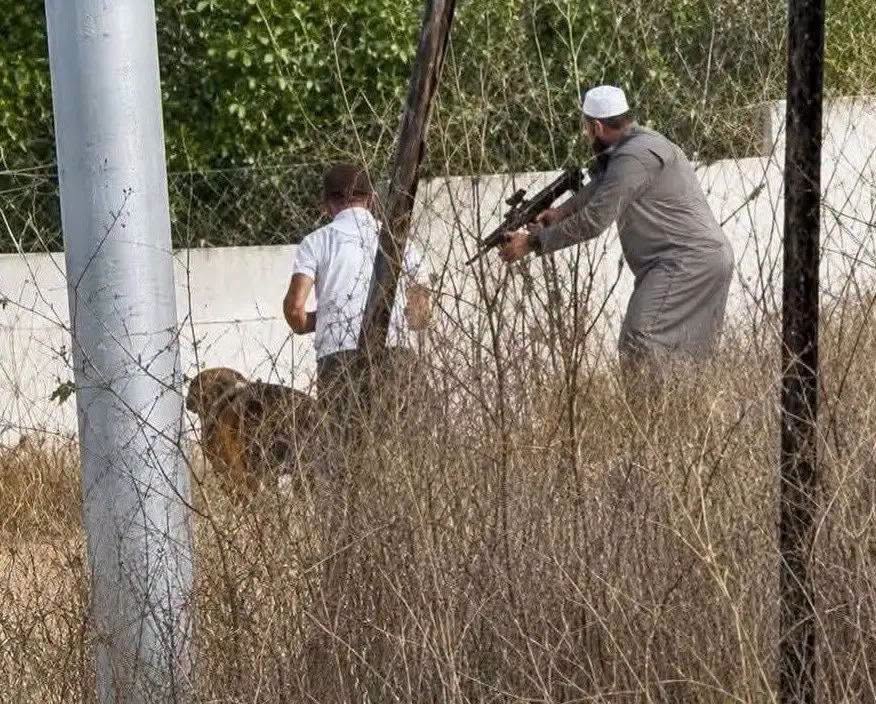
The head of the group was Farouk Ramadan, a local sheikh (religious authority), pictured here.
As the crowd closed in, members of the Havat Gilad civilian security team and other armed civilians, including Benayahu Mellet, the head of the Havat Gilad group, were trying to extract the hikers.
They attempted to get the crowd to “back off” and maintain a defensive perimeter.
Things got heated as the two groups got in each other’s faces.
The settlers fired warning shots into the air.
The IDF soon arrived. However, witnesses from the hiking group allege that the official response by the first soldier present was to refuse to fire. They claim that even as additional troops arrived, they maintained a posture of inaction despite the group being surrounded, leaving the civilian guards to manage the escalating friction alone.
Ramadan may well have been trying to protect his village. But then he went too far.
He seized an assault rifle from Mellet and opened fire on the group, murdering Mellet at close range and fatally wounding IDF artillery commander Maj. Yuval Ezra.
Only after the civilians came under direct fire did the IDF platoon commander on site return fire to “eliminate” the threat, killing Ramadan and his two brothers, Ibrahim and Jawad, along with their cousin, Imran.
In the aftermath, Israel took the opportunity to frame the incident as yet another example of why the Arab population in Samaria is dangerous.
For their part, Palestinians framed it as yet another calculated decision by Israel to take over and inflict unnecessary damage as part of its overall strategic plan.

Both sides genuinely believe the land belongs to them.
This is not something that can be negotiated away.
However, it’s also not helpful to inflame strong emotions on both sides.
Instead of spreading lies to justify propaganda, it would be better to face the very real duality of perspectives here, and find a way to agree to disagree (even if it means simply staying away from each other) until the Messiah comes.


You must be logged in to post a comment.