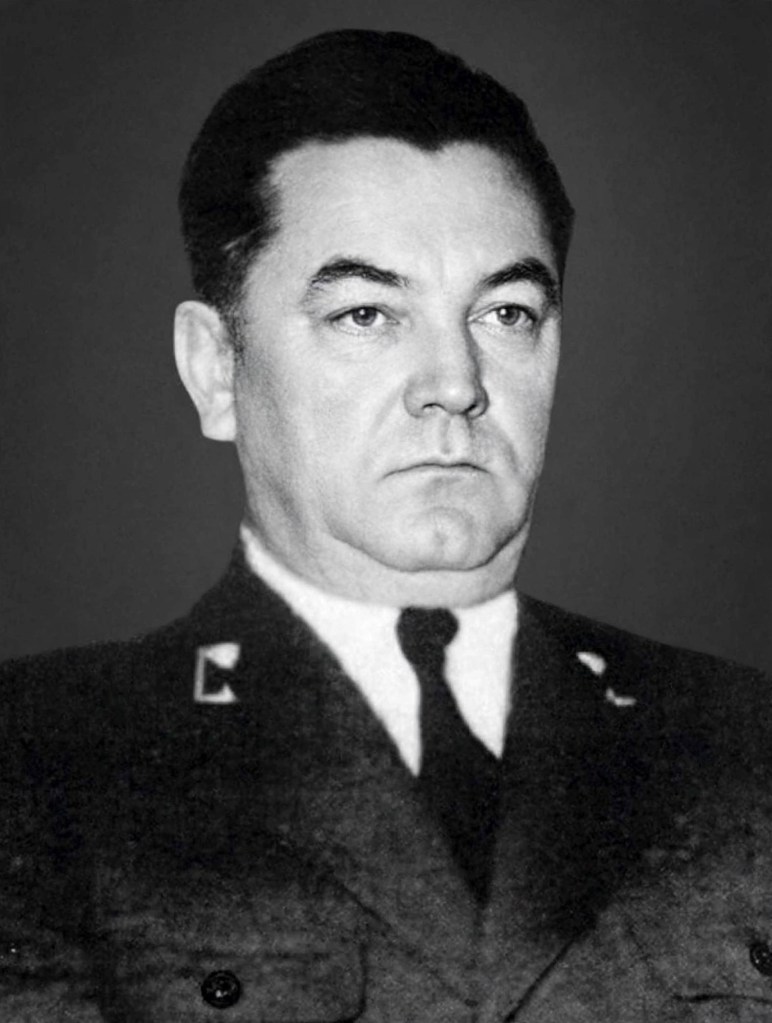
The 1986 conviction of Andrija Artuković in Zagreb stands as one of the last major postwar prosecutions of a senior official of the Independent State of Croatia.
For many, it represented delayed justice against a man long portrayed as the “Butcher of the Balkans.”
The context is the establishment of the NDH (Nezavisna Država Hrvatska, meaning Independent State of Croatia). This fascist puppet state was established in April 1941 after Hitler’s invasion of Yugoslavia. Ruled by the Ustaše movement under Ante Pavelić (with Andrija Artuković serving as a senior minister), it existed until 1945 and was responsible for systematic mass murder, concentration camps (including Jasenovac), and the genocide of Serbs, Jews, Roma, and political opponents.
To be clear, Artuković’s primary ideological commitment was to Ustaše Croatian nationalism rather than German National Socialism. He willingly collaborated with and advanced the goals of Hitler’s alliance in order to achieve it.
Yet a close examination of the evidentiary foundation, the procedural framework of both the American extradition and the Yugoslav trial, and the intense social and political pressures surrounding the case reveals significant weaknesses.
These weaknesses do not erase Artuković’s documented role as Interior Minister in a regime responsible for systematic mass murder.
They do, however, raise serious questions about whether the specific individual counts on which he was convicted were proved to a reliable standard, and whether the process that produced the judgment met even basic requirements of fairness.
The Artuković case underscores the vital importance of pursuing the truth without regard to personal bias, political pressure, or the intensity of public demand for a particular outcome.
The Fragility of the Core Eyewitness Evidence
The four counts on which Artuković was convicted rested heavily on a small number of affidavits and testimonies, above all that of Bajro Avdić.
Avdić claimed to have served as a young Ustaše escort and to have personally heard or observed Artuković issue orders for specific mass killings, including the machine-gunning of roughly 450 civilians near Kerestinec in late 1941 because a camp could not hold them, the destruction of villages near Vrginmost, and the execution of prisoners near Samobor.
These accounts supplied the concrete, individualized orders that elevated the case beyond generalized ministerial responsibility.
Yet Avdić’s reliability was contested from the outset.
He had given earlier statements in the 1940s and 1950s that differed in chronology, detail, and claimed presence.
Questions persisted about whether he had actually held the elite escort role he asserted, whether he had been physically present at the locations described, and whether his later specificity reflected genuine recollection or reconstruction under the influence of Yugoslav authorities.
Defense counsel in the United States labeled the 1984 affidavit “an utter sham and fabrication.”
In Zagreb, counsel challenged contradictions and argued that Avdić was a coached witness.
These challenges were never fully tested. In the American extradition hearings, rules severely limited the ability to contradict foreign affidavits or to cross-examine the affiant.
In the Yugoslav trial, the defense operated under constrained conditions that restricted the presentation of counter-evidence.
Other supporting material suffered similar problems. Prior inconsistent statements by additional witnesses were not fully disclosed or tested.
Historical records concerning the structure of Ustaše units, the availability of certain forces, and Artuković’s precise movements complicated portions of the narrative.
The result was a case in which the most dramatic, individualized allegations rested on evidence whose credibility had never been subjected to rigorous, open adversarial scrutiny.
Procedural Constraints and an Impaired Defendant
The American extradition process itself was structurally tilted. Extradition law requires only probable cause and affords foreign affidavits substantial weight. Live confrontation of foreign witnesses is generally unavailable.
Artuković’s advanced age, legal blindness, and reported cognitive decline further complicated matters.
Competency examinations were repeated, yet the proceedings continued.
When the final extradition order issued, it was executed with unusual speed while certain appellate avenues remained open; the defendant was removed without ordinary opportunity for farewell or further consultation with counsel.
The Zagreb trial compounded these difficulties.
Artuković, then 86 and in declining health, was tried under a system that did not provide the full range of defense rights expected in a modern adversarial proceeding.
Court-appointed physicians declared him fit on a daily basis despite defense claims of dementia.
The political character of the forum—a communist state with long-standing interest in the case—created an environment in which acquittal was improbable.
Croatian historian Ivo Goldstein later observed that Artuković had been tried on “false points of the indictment,” specific individual crimes that did not occur as charged, even while arguing that broader responsibility for genocidal policy was clear.
The observation underscores a central tension: the desire to punish a high-ranking Ustaše official produced a conviction on counts whose evidentiary support was thin.
The Climate of Extreme Pressure
The case unfolded under intense social and political pressure to convict.
In the United States, the Office of Special Investigations operated under a mandate to pursue Nazi collaborators.
Jewish organizations and survivors’ groups pressed for action against a man long identified as a senior perpetrator.
Cold War considerations that had earlier protected Artuković shifted; by the 1980s the political cost of inaction had risen.
In Yugoslavia, the trial served both justice and regime interests, reinforcing the narrative of antifascist legitimacy while targeting a prominent Croatian nationalist figure.
Media coverage, public expectation, and institutional incentives all pointed toward conviction. In such an atmosphere, the risk that evidentiary weaknesses would be minimized or overlooked increased substantially.
This pressure was not unique to Artuković, but it was acute.
The moral urgency of accounting for the crimes of the NDH—the systematic murder of Serbs, Jews, and Roma—created a powerful demand for visible accountability.
That demand was legitimate.
It did not, however, guarantee that every specific allegation leveled against one aging minister would withstand careful examination.
Pavelić’s Escape and the Asymmetry of Accountability
The contrast with Ante Pavelić, the Poglavnik of the NDH, is instructive. Pavelić bore ultimate political and ideological responsibility for the regime’s program. Yet he escaped effective postwar justice.
After the collapse of the NDH he fled via the ratlines—networks involving elements of the Croatian Catholic clergy, the Vatican’s refugee assistance apparatus, and ultimately the protection of Juan Perón’s Argentina.
It is instructive that Ante Pavelić escaped via the same clerical ratlines that carried other high-ranking Axis collaborators to Argentina, while Artuković—lacking comparable protection—was left exposed and ultimately extradited.
Pavelić lived openly in Buenos Aires for years, continued political activity, survived an assassination attempt, and later moved to Spain, where he died in 1959 without facing trial.
Protection by sympathetic governments, clerical networks, and Cold War calculations that prioritized anti-communism over full reckoning with Axis collaborators allowed the architect of the Ustaše state to evade the courtroom that eventually claimed his Interior Minister.
The asymmetry is stark.
Pavelić, the central figure, died free. Artuković, a senior but secondary official, was extracted from the United States as an elderly, impaired man and convicted on counts whose strongest eyewitness support remains contested.
The difference reflects not only the relative success of escape networks but also the selective nature of postwar accountability.
Political convenience, institutional priorities, and the availability of cooperative jurisdictions shaped who faced judgment and under what conditions.
Conclusion
The case against Andrija Artuković exposed genuine tensions between the moral imperative to prosecute high-level perpetrators of mass atrocity and the procedural and evidentiary requirements of reliable adjudication.
The specific individual accusations, particularly those dependent on Bajro Avdić, suffer from unresolved credibility problems and were never subjected to full adversarial testing.
The procedures in both the United States and Yugoslavia fell short of robust fair-trial standards, especially given the defendant’s age and condition. Extreme social and political pressure to secure a conviction further tilted the process. Meanwhile, Ante Pavelić—the figure of greatest responsibility—escaped justice entirely through protective networks that the postwar order proved unwilling or unable to dismantle.
None of this requires denying the criminal character of the NDH or Artuković’s high ministerial role within it.
It does require acknowledging that the 1986 judgment rests on a narrower and more fragile foundation than is often assumed.
Historical accountability is strongest when it rests on evidence that survives scrutiny, not merely on the intensity of the demand for a verdict. In the Artuković case, that standard was not fully met.
Photo, via Wikipedia, edited by AI for clarity. This post is hereby released to the public domain.


You must be logged in to post a comment.