
Update: “Umar Matthew Ingalls won a coveted place at Cornell University in 2023….Ingalls, 21, was later expelled from Cornell following an internal university investigation. One of Ingalls’ neighbors told the Daily Mail they believe he has returned to the Middle East, where he enjoyed a privileged upbringing and attended an elite private school in Emirates Hills, the wealthy enclave often dubbed the ‘Beverly Hills of Dubai.’” (Archive link: https://archive.is/2026.10.06-171742/https://www.dailymail.com/news/article-16184477/cornell-university-gang-rape-matthew-ingalls-dubai-phone-call.html)
I’ve been digging into public records and news items related to Matthew Ingalls, one of the individuals named in connection with the Cornell Chi Phi case. Thank you to the citizen researchers who sparked me to look into this.
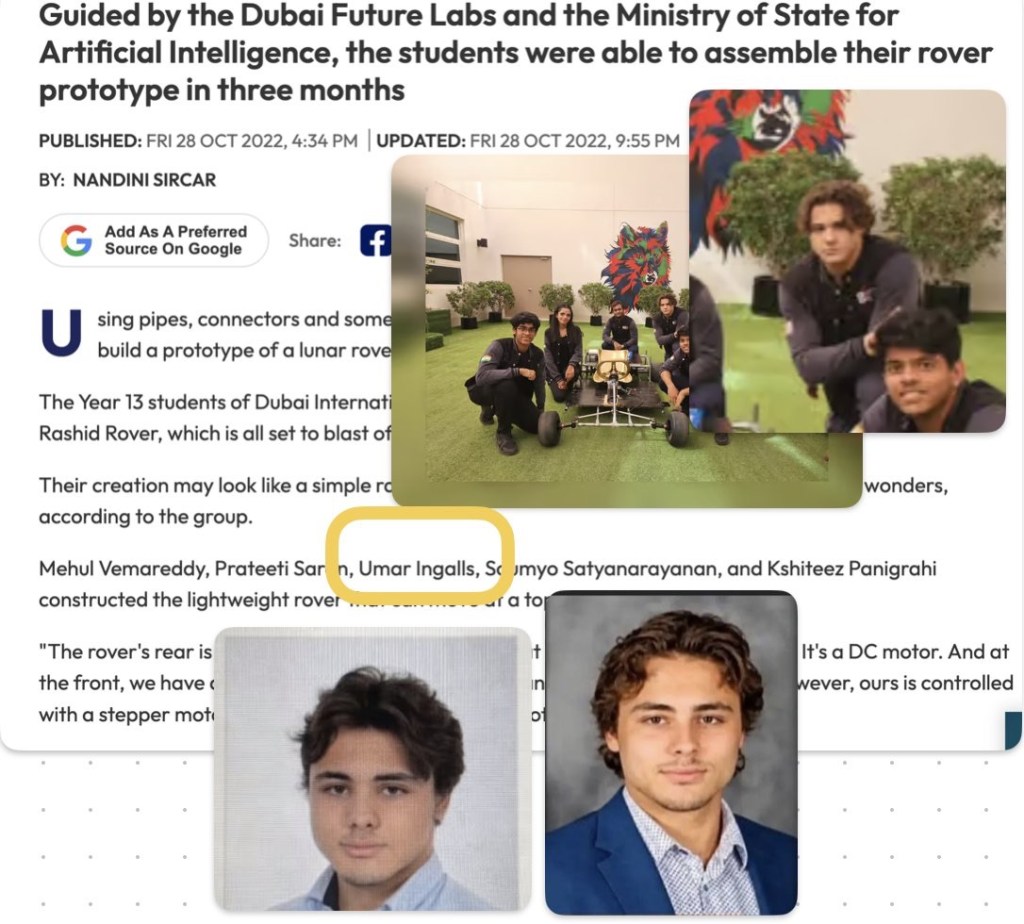
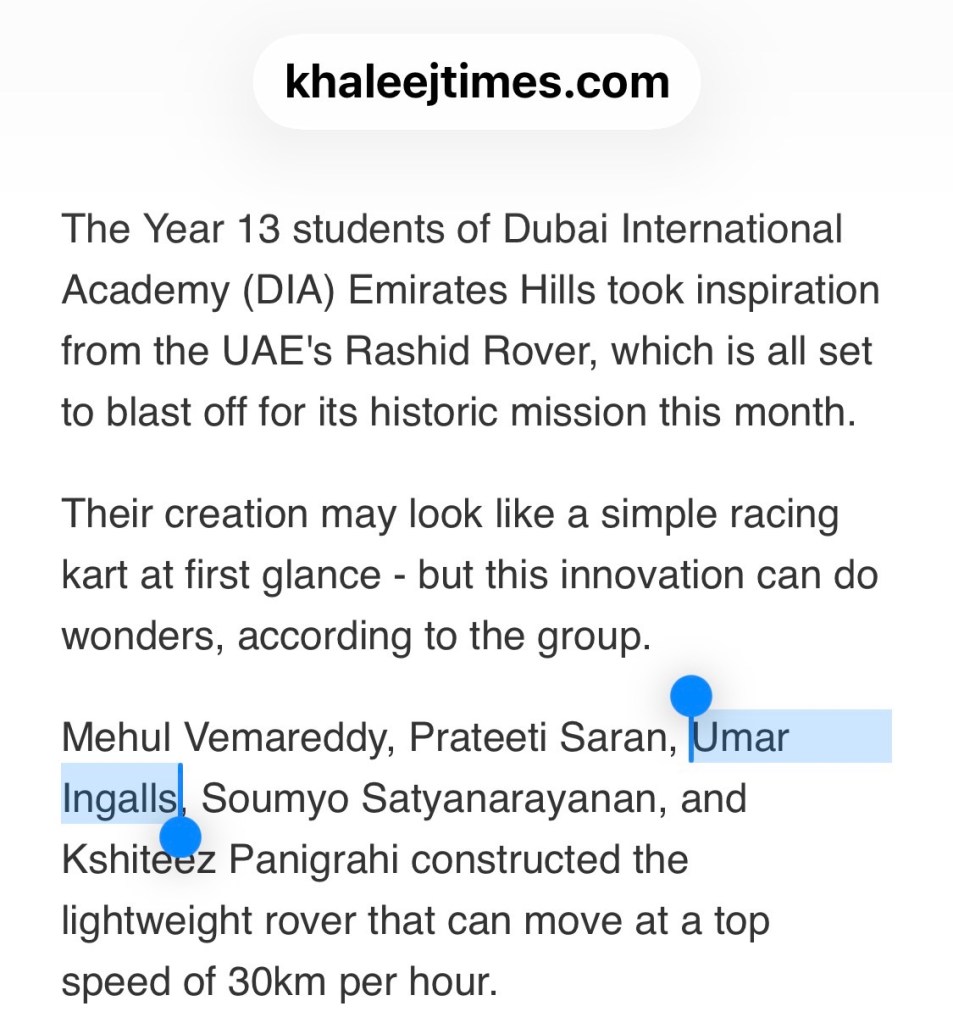
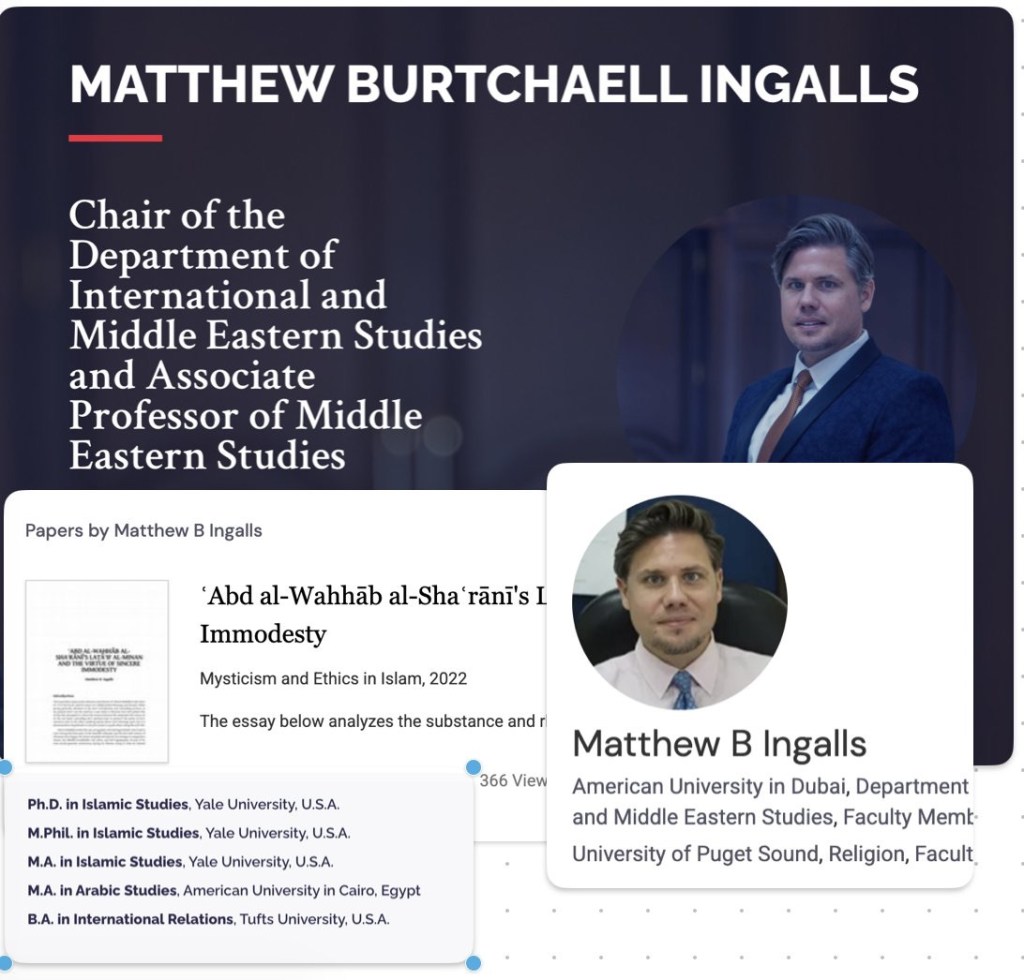
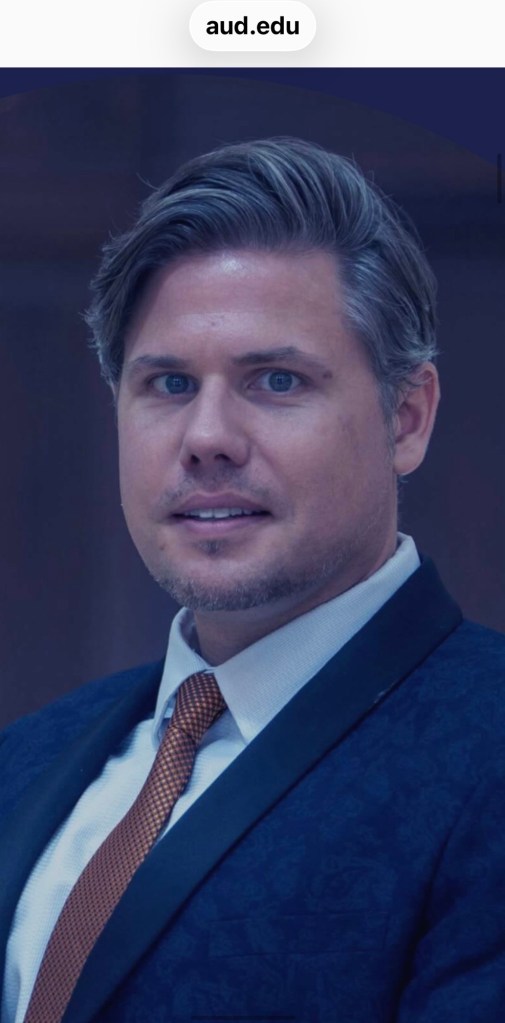
In a recent X post I listed the names Matthew Ingalls, Umar Ingalls, and Matthew Burtchaell Ingalls side by side, linked a Khaleej Times piece about Dubai International Academy students who built a lunar-rover prototype, and pointed to the faculty profile of Matthew Burtchaell Ingalls, Chair of the Department of International and Middle Eastern Studies at the American University in Dubai.
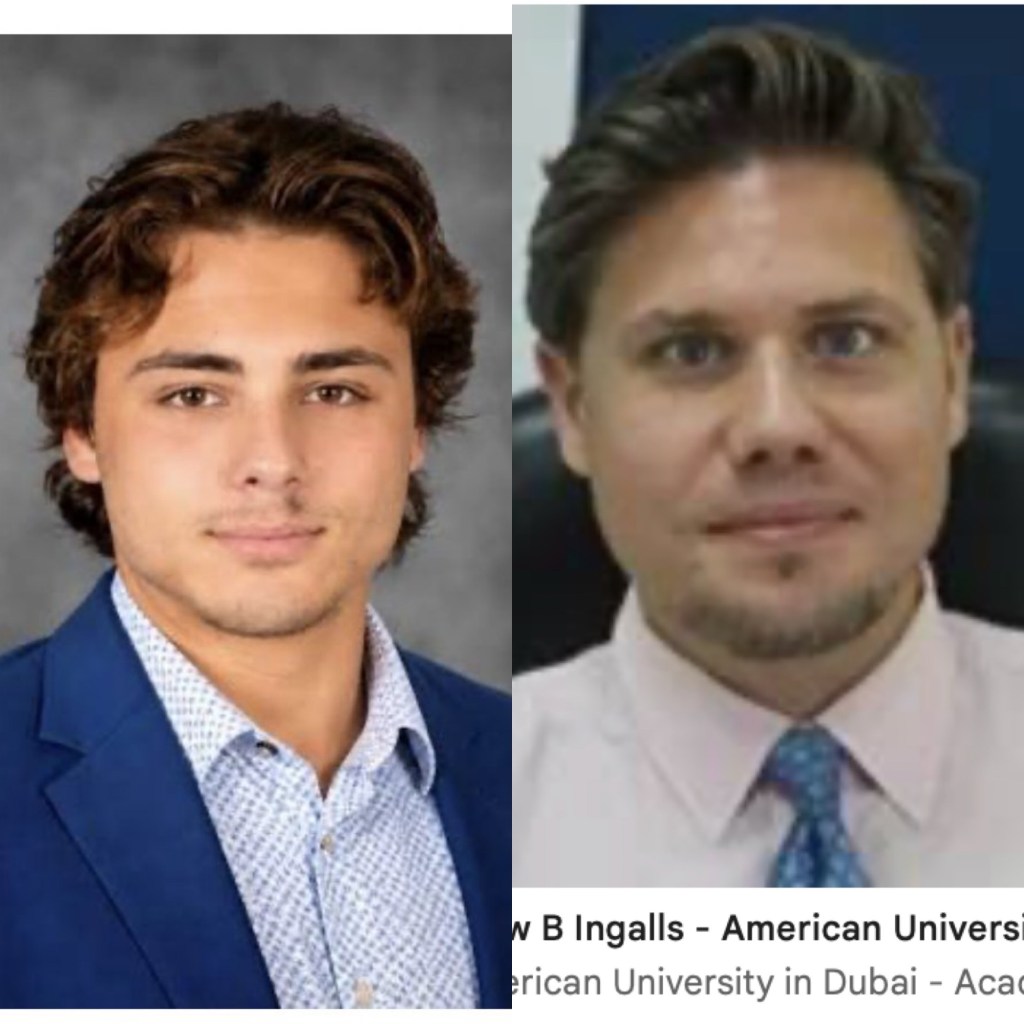
The Khaleej Times article identifies a student participant named Umar Ingalls. The academic Matthew Burtchaell Ingalls is a published scholar of Islamic studies with degrees from Yale and the American University in Cairo who has lived and worked in the UAE for years. When I place side-by-side images—one of a young man matching descriptions and photos associated with the Cornell student, the other of the older professor—I see noticeable similarities in facial structure, particularly around the eyes, brow, and overall bone structure. Such visual parallels are of course not proof of relationship, yet they form part of the publicly available material that keeps me looking further.
If the Cornell student and the Dubai school participant are the same person, or if they share a close family connection to the professor, that would place Matthew/Umar Ingalls within a household or extended network shaped by long-term residence in the Gulf, academic specialization in Middle Eastern and Islamic studies, and the cultural environment of the UAE. Cultural background can influence attitudes toward authority, group loyalty, gender norms, and the boundaries of consent. Whether or not those influences were operative in any particular case remains a matter for evidence and adjudication, not assumption.
Still, when I am already examining possible motives of group loyalty (in this instance, to a fraternity), the presence of a plausible transnational family and cultural context is relevant data rather than an irrelevancy.
One practical question follows directly from the name overlap: if the given name is Umar, why does he appear in U.S. university and legal contexts almost exclusively as Matthew? People adopt or emphasize different names for many ordinary reasons—family preference, ease of pronunciation, professional branding, or personal choice. In the absence of confirmation, the discrepancy simply invites clarification.
Public records and self-presentation that consistently favor one name while another appears in earlier overseas reporting leave an open factual point.
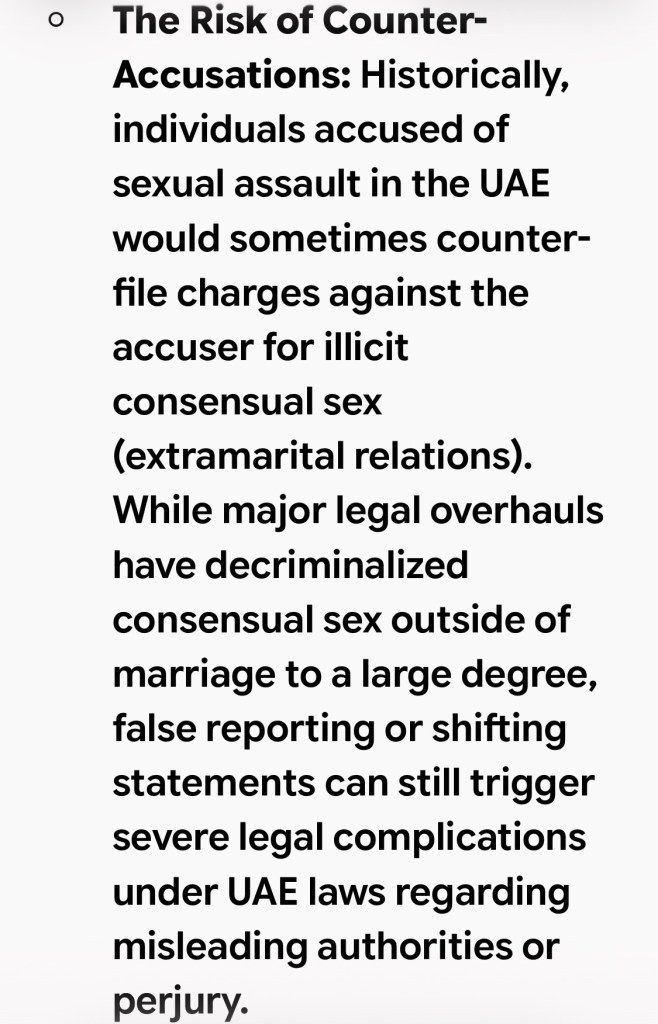
I also noted material on the historical risk of counter-accusations in the UAE. Individuals accused of sexual assault there sometimes responded by filing charges against the accuser for illicit consensual sex (extramarital relations). Although major legal reforms have largely decriminalized consensual sex outside marriage, false reporting or shifting statements can still produce serious legal consequences under UAE rules on misleading authorities or perjury. If there is a genuine family or cultural connection to the UAE, familiarity with these dynamics could shape how someone approaches accusations, evidence, or statements—even in a U.S. setting. That possibility does not prove anything about the Cornell case, but it is another data point worth including when assessing whether a Middle Eastern background is relevant to the broader picture.
None of the foregoing constitutes a finding of fact about identity, parentage, or motive. It is an inventory of publicly linked names, a news report, a faculty biography, observed facial similarities, and related legal-context notes that I am examining in the same spirit of open-source research. Further primary documentation—birth records, school enrollment histories, family statements, or official identity documents—would be required before any firm conclusion could be drawn. Until then, the material remains what it is: suggestive leads that warrant careful, evidence-based scrutiny rather than dismissal or amplification beyond the available sources.
Sources:
- https://dannielleblumenthal.substack.com/p/matthew-ingalls-desire-to-impress?r=219m92&utm_medium=ios
- https://www.khaleejtimes.com/uae/dubai-school-students-build-lunar-rover-prototype-inspired-by-uaes-rashid-rover
- https://www.aud.edu/aud-school/school-of-arts-sciences/faculty-and-staff/matthew-burtchaell-ingalls/
- https://aud.academia.edu/MatthewIngalls/CurriculumVitae


You must be logged in to post a comment.